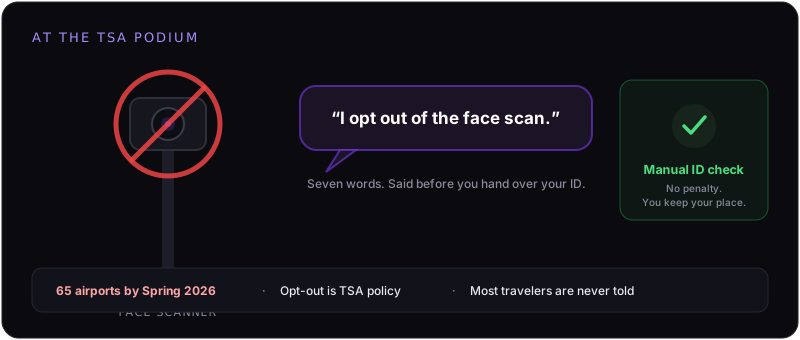
Face scanning at U.S. airport checkpoints has gone from pilot program to default. TSA already uses facial comparison at hundreds of checkpoints, and its "Touchless ID" program is slated to reach roughly 65 airports by Spring 2026. The technology is presented as a convenience — look at the camera, skip the fumbling. What's presented much more quietly is that, for standard domestic screening, you can simply decline.
What the Scanner Actually Does
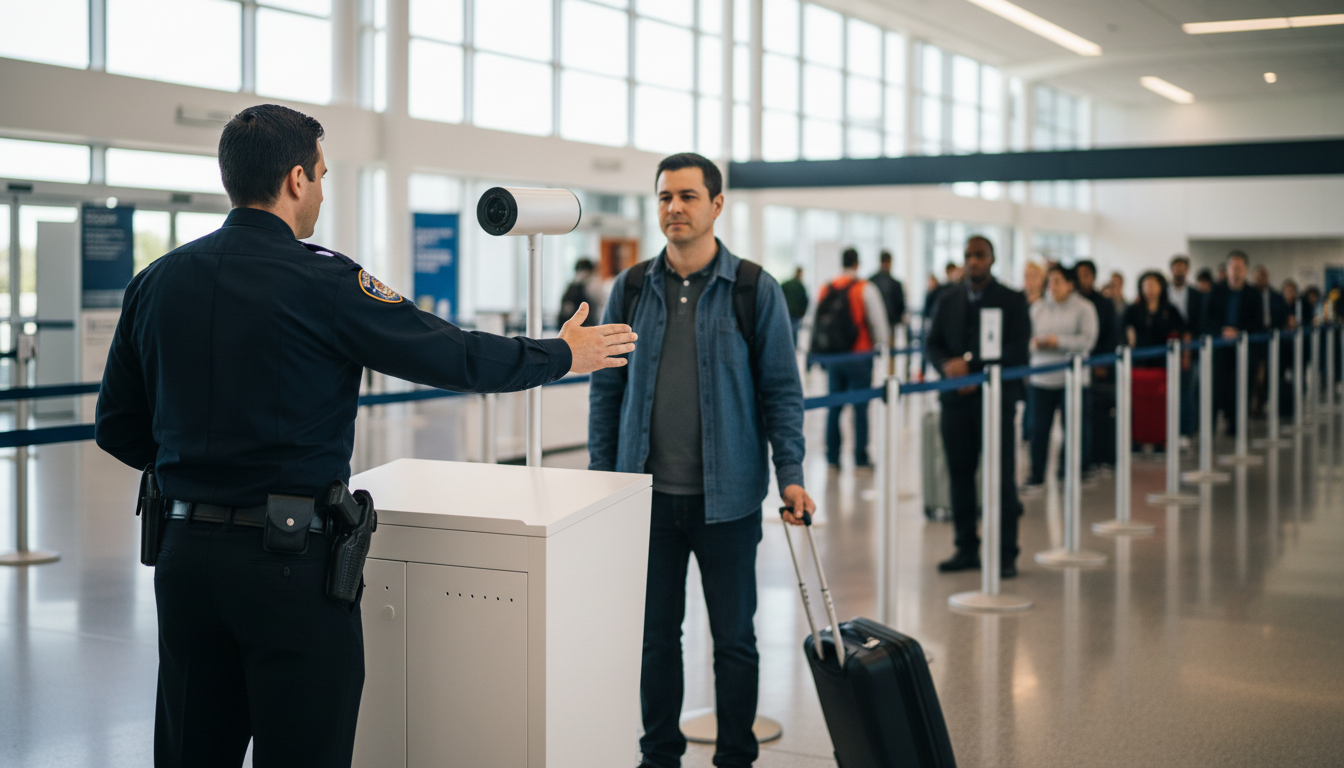
At a standard checkpoint (called CAT-2), the camera takes a live photo of your face and compares it to the photo on the ID you handed over — a one-to-one match: is this the person on this ID? TSA says these checkpoint photos are generally deleted shortly after the match, with exceptions for limited testing periods.
"Touchless ID" goes further: you don't present an ID at all — the system matches your live face against government photo records for enrolled, opted-in travelers (e.g., PreCheck with certain airlines). Convenient, and genuinely opt-in — but it normalizes the idea that your face is your ID, which is exactly why it's worth knowing where the choice sits.
Your Right to Opt Out
- It's TSA policy, not a favor. TSA states travelers may decline facial comparison at standard checkpoints without penalty or delay beyond a manual ID check.
- Almost nobody is told. Privacy researchers and journalists have repeatedly found the signage minimal and verbal notice rare — one widely-cited estimate is that 99% of passengers don't realize declining is an option.
- Even senators get pushback. Senator Jeff Merkley — a longtime critic of the program — was told at Washington National that he couldn't opt out. That was wrong, and TSA policy said so. If it can happen to a sitting senator, expect the occasional confused agent, and stay polite but firm.
- Oversight agrees. The Privacy and Civil Liberties Oversight Board has recommended TSA improve transparency, signage, and staff compliance around the opt-out.
- Domestic flights (TSA checkpoint): you can opt out. This is what the rest of this guide covers.
- International arrival and departure (CBP / customs): face photos at the border run under different rules. U.S. citizens can usually still request manual processing, but many foreign nationals cannot, and some entry and exit points require the photo. Ask, but be ready for a firm "no" at customs.
- It also varies by airport and airline: the equipment, the signage, and how staff handle a decline differ from one location to the next. A calm, early request is your best tool everywhere, but expect the experience to be inconsistent.
Exactly What to Say (and When)
- Say it early: as you step up to the podium, before the camera fires — "I opt out of the face scan."
- Hand over your ID as normal. The agent checks it against your face the old way, by looking at you.
- If you get pushback ("it's required now"), stay calm: "My understanding is TSA policy allows me to decline the photo and get a manual check." That sentence resolves nearly every encounter. If it doesn't, you can ask for a supervisor.
- No drama required. It's a routine request. Agents process opt-outs every day.
What Happens Next
The agent verifies your ID manually and waves you through. In practice this adds seconds, not minutes — you don't lose your place in line and you aren't routed to extra screening. If a camera captured you before you spoke up, you can ask whether the image was taken and note your objection; per TSA's stated practice, checkpoint photos from one-to-one matching aren't retained beyond the transaction in normal operation.
Why Bother, If the Photo Is Deleted Anyway?
- Scope creep is the pattern. Programs that start as one-to-one verification tend to grow — more airports, more integrations, more retention exceptions. Reporting in 2026 on TSA passenger data being shared with other agencies, including for immigration enforcement, sharpened exactly this concern.
- Opting out keeps the choice alive. The legal and political case for keeping face scanning optional depends on people actually exercising the option.
- Biometrics aren't a password you can rotate. A leaked credential gets reset. A leaked face template is yours forever. Minimizing where your face gets scanned is the same hygiene as not reusing passwords — done before anything goes wrong.
The Face Scanning You Can't Decline
Here's the uncomfortable contrast. The airport camera is governed, auditable, and opt-out-able — you can literally say no to it. The face scanning that actually follows you around is none of those things: PimEyes, Clearview AI, FaceCheck.ID and the other facial-recognition engines scraped billions of photos off the public web, built a searchable faceprint of you without asking, and sell the lookup to anyone. There's no podium, no agent, no seven words.
The only lever you have there is removal: filing opt-out and deletion requests with each engine, and re-filing when re-scrapes put you back. That's what FacePrivacy does — the paperwork, the verification steps, the monthly re-filing, with confirmations tracked on your dashboard.
Opt out of the face scans that don't ask first.
FacePrivacy files removal requests with PimEyes, Clearview AI, FaceCheck.ID, Lenso.ai and the other major facial-recognition engines — and re-files monthly — so your face stops being a public search term.
Protect your face →