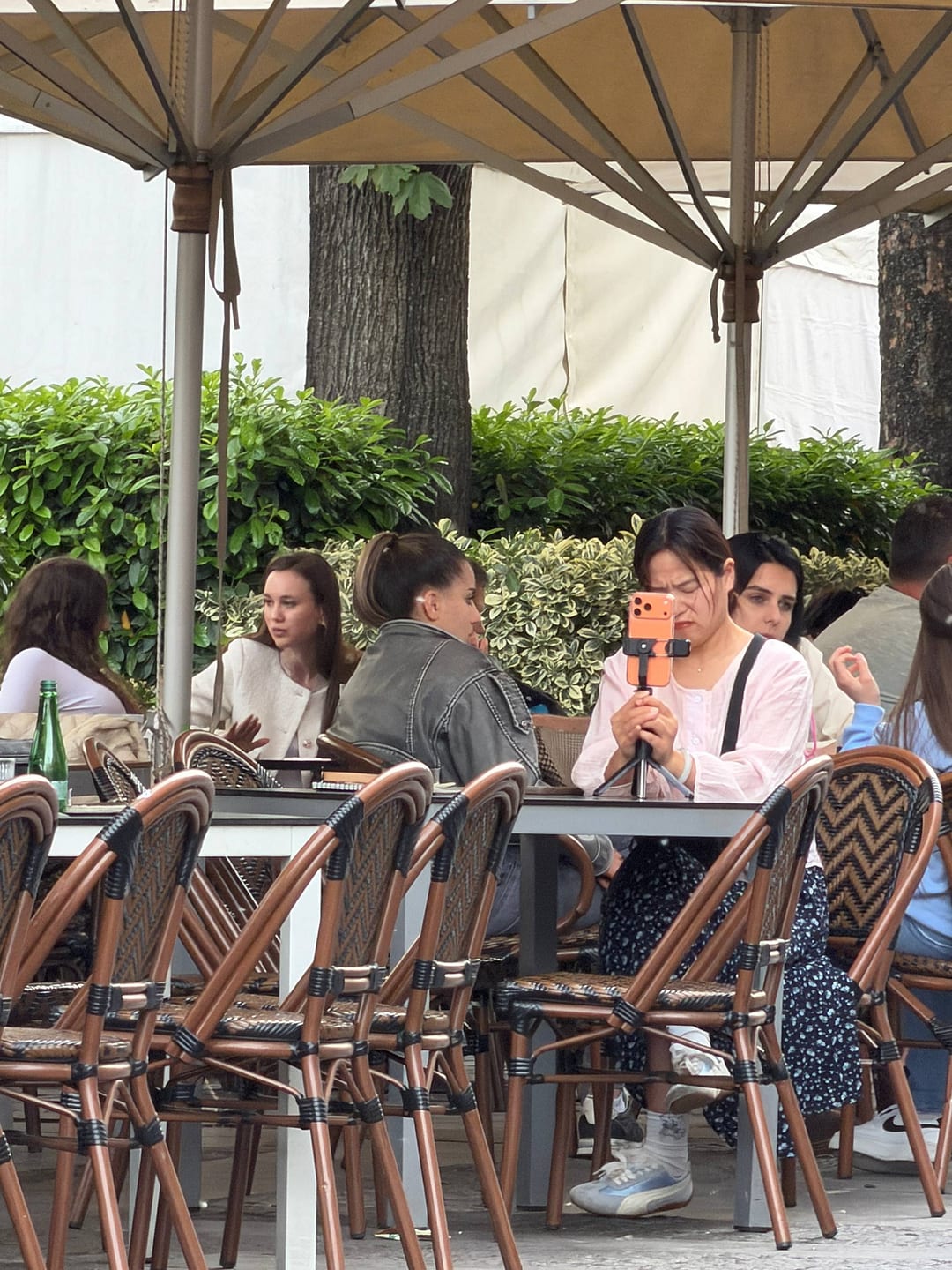
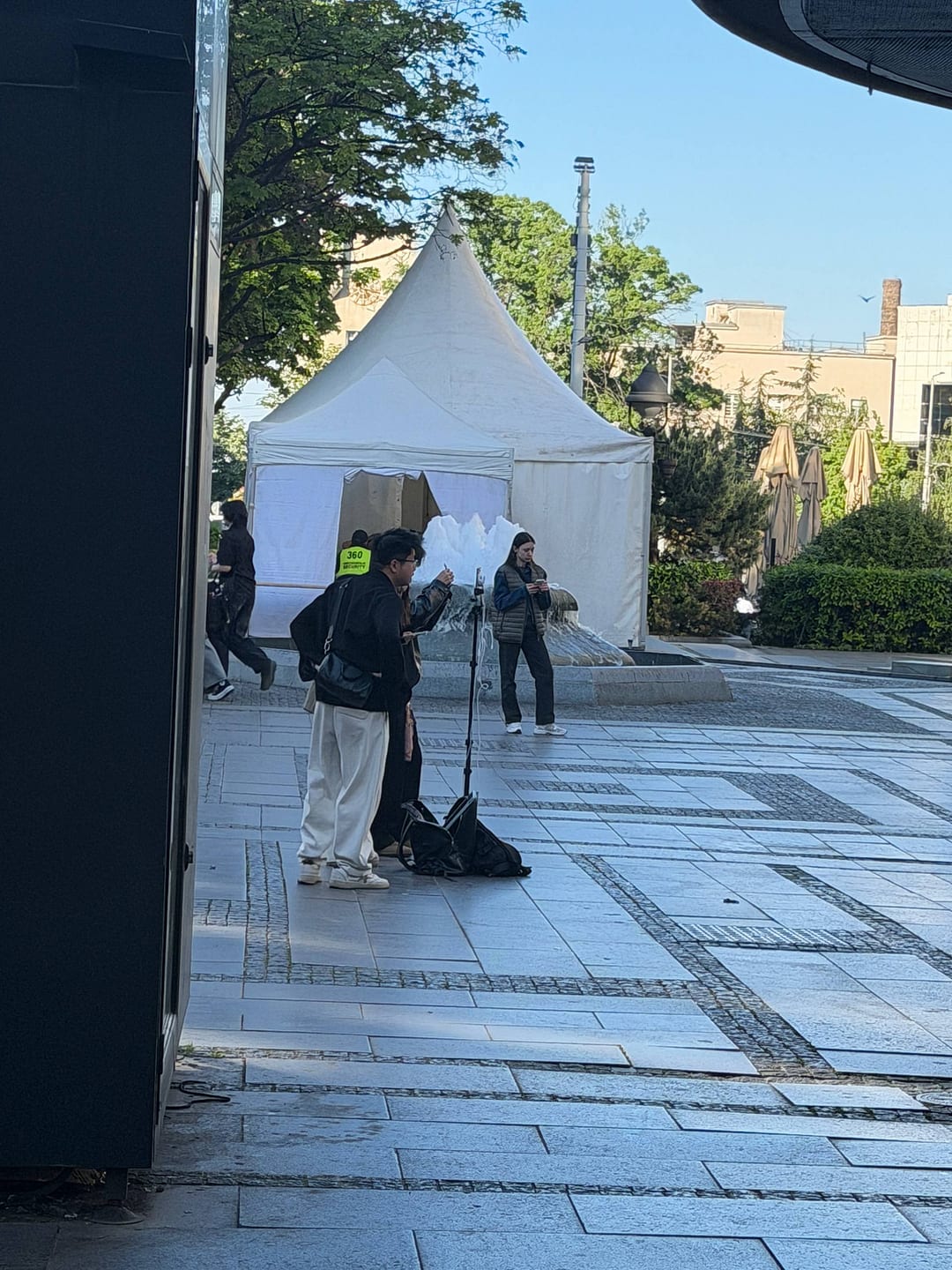
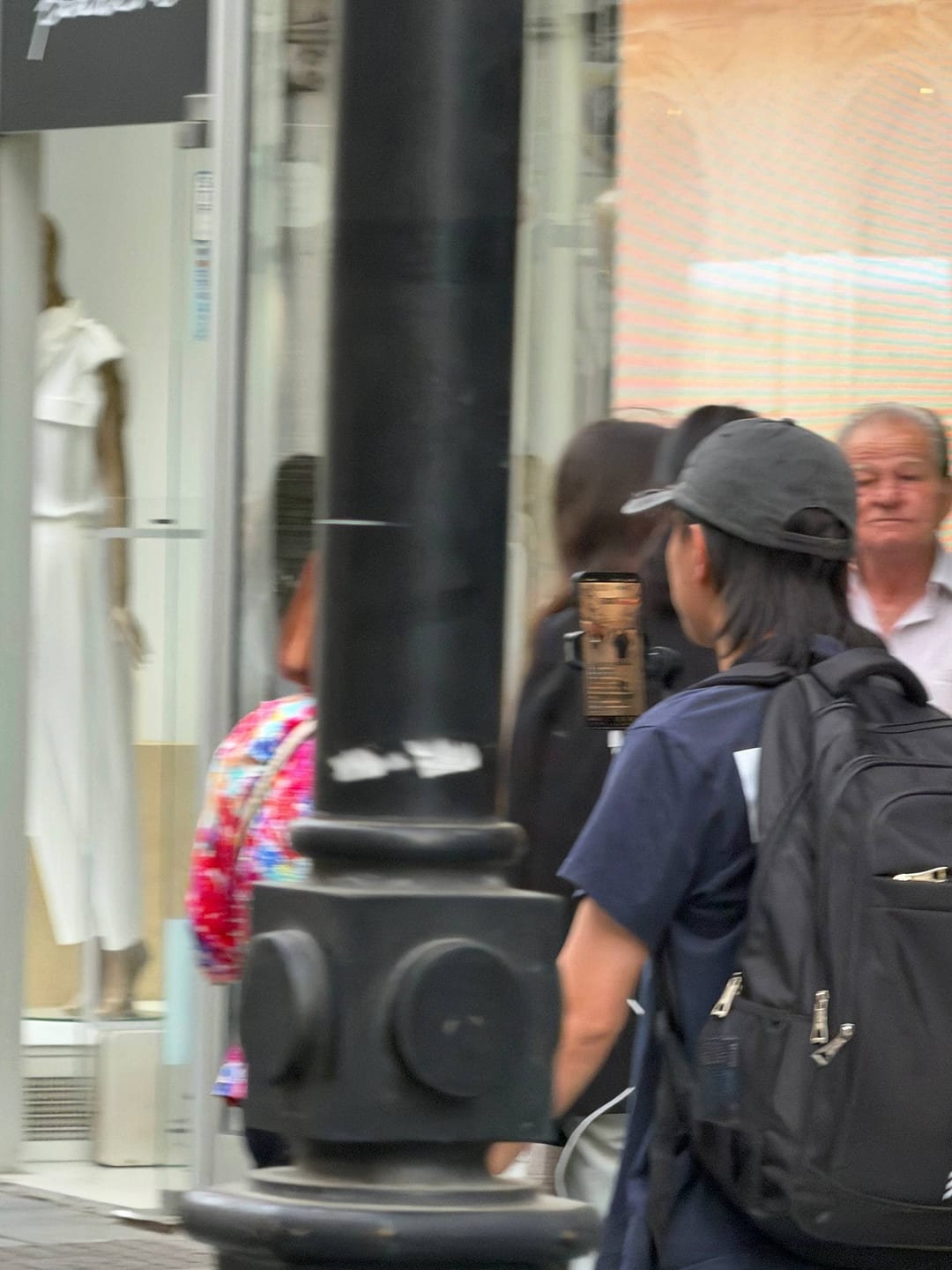
For most of May and June 2026 they were hard to miss. Walk through a busy mall in Belgrade and there they'd be, parked in the best spots by the doors. One camera aimed out at the shoppers. A second camera, the selfie one, aimed back at the person holding it. A few of them I could shrug off. By June there were enough that it stopped feeling like coincidence, and I started doing what everybody does. I started guessing.
The guess that kept winning was the dramatic one. Spies. Face harvesting. Some quiet operation feeding a database somewhere. So let me talk myself out of it — and then talk you into the thing that should actually bother you.
The boring answer is probably the right one — probably
That two-camera setup is, most likely, just a livestreaming kit. One lens on the scene, one on your face for reactions and chat. China runs a massive live-shopping and street-streaming scene, and broadcasting from a packed mall is a normal way to do it. Good light, a backdrop people recognize, constant motion. Belgrade malls fit the brief.
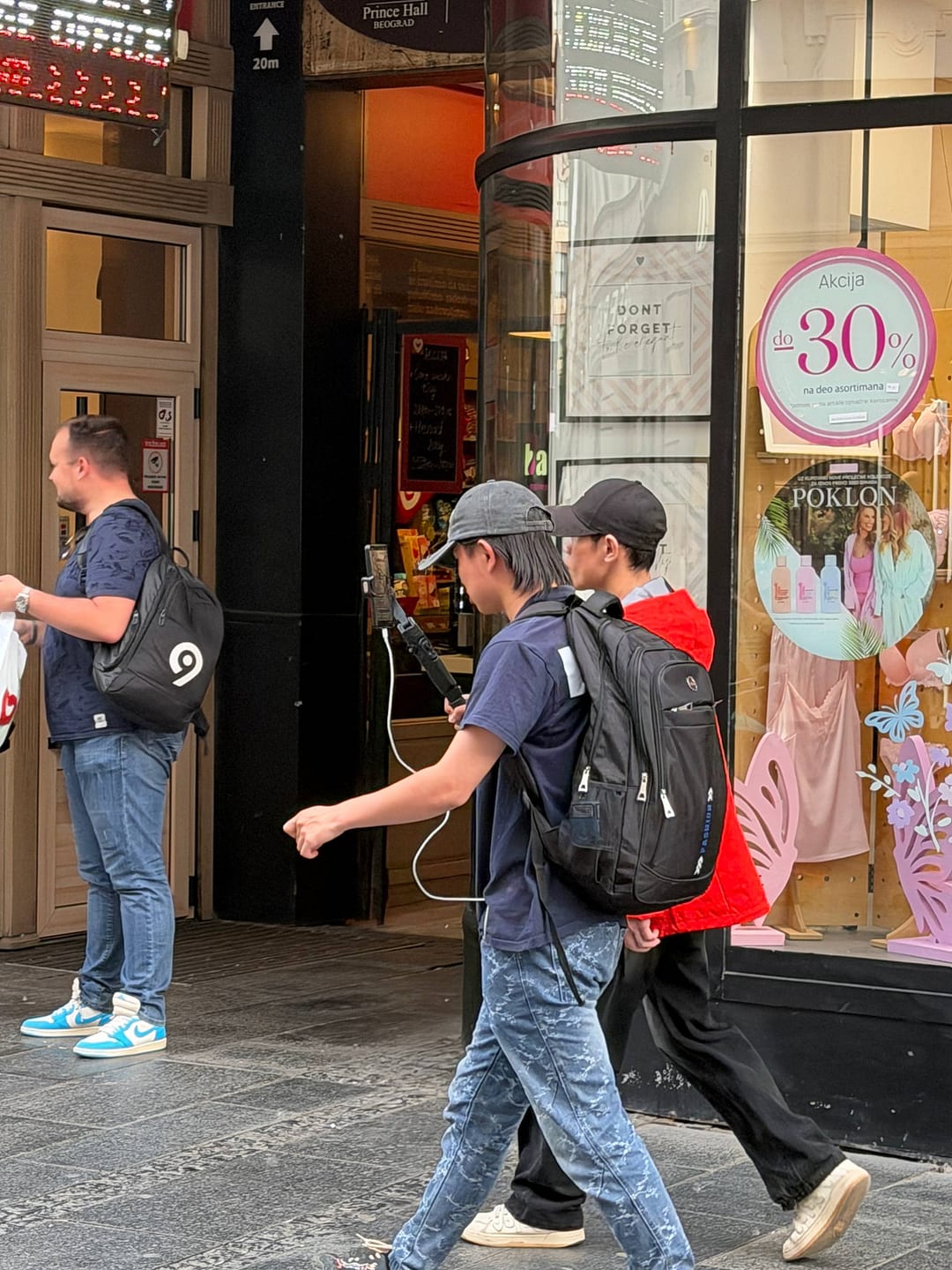
And the logic mostly holds: a spy who needs to stay invisible does not set up in the busiest doorway in the building with a ring light and a phone gimbal. If somebody wanted bulk footage of Serbian faces, there are quieter ways to get it. Scrape social media. Tap public webcams. Buy CCTV access. A selfie cam in the open is the opposite of that.
So the likeliest story is the dull one — they're probably just making content. But we want to be honest with you: we don't actually know. We never spoke to them, never saw what the footage was for, and "probably streamers" is a guess, not a finding. We're not going to pretend to certainty we don't have.
But Belgrade is a weird place to feel watched
The part I can't wave away is where this is happening. Belgrade has spent years arguing about being one of the most camera-covered cities in the region, and most of that argument points at one source: a "Safe City" deal that wired the place up with Chinese-supplied cameras, a lot of them branded Huawei.
The cameras got sold the way they always do. Traffic. Crime. Public safety. The catch is that a chunk of that hardware shipped with facial-recognition capability baked in — the kind that can pick a face out of a crowd and match it. When people asked the obvious questions — how many cameras, where exactly, and whether the face-matching is actually switched on — they mostly got silence or a flat denial. A local campaign literally called itself "Thousands of Cameras," because that was the whole problem: nobody could get a straight count or a straight answer.
So picture the setup. You're standing in a mall in a city already blanketed with face-capable cameras nobody will fully account for, and now there's a row of people pointing more cameras at the crowd. The spy theory isn't crazy in that context. It's the brain trying to connect a real, unsettling backdrop to the random thing in front of it. The infrastructure to scoop up faces at scale is genuinely sitting there. The streamers — if that's what they are — are just the part you can see.
Your face is a password you can't change
Sit with this one. Modern face recognition does what's called one-to-many matching. Take a single face, ask whether that person already exists somewhere in a database of millions, and if so, name them. It is not checking you against one known photo. It is checking you against everybody.
That turns your face into a lookup key. Get one clean frame of you and the right tool can walk it back to your name, your accounts, where you work, roughly where you live. That used to take a government and a budget. Now there are consumer sites where a stranger uploads a photo and finds every other public picture of you online.
Which means the person filming doesn't even need a database. The database gets built later, by anyone, out of footage exactly like that — including footage you wandered into by accident. The guy with the selfie cam is interchangeable. Your face is the part that stays behind.
So the real question was never "is he a spy." It's "how easy is my face to look up, and how do I make it harder."
What you can actually do about it
Face privacy has nothing to do with hiding in public. You can't, and chasing it will only make you miserable. The goal is being harder to search. A couple of levers, strongest first.
- Cut down the photos. Face search only works on pictures it can crawl, so the biggest thing in your control is how many clear, front-facing shots of you are floating around. Lock your profiles, pull old public albums, untag yourself, think before you drop a sharp headshot on an open account. A face that was never indexed can't be found. (More on how engines get your photos.)
- Hand off the cleanup. The face-search engines have removal processes, but doing it by hand means hunting down every site, filing every form, and checking back when your face crawls back in. That's the loop we run for you — find where your face is turning up across the face-search engines, get it pulled, then keep watching so it stays pulled. It's the lazy version of the photo cleanup above, except it actually keeps up.
- Don't bother pretending you can cloak yourself day to day. Recognition gets worse with bad angles, hats, low light — sure. But you're not going to live your life in a balaclava and you shouldn't have to. The realistic version is small: if a stranger is filming you up close, step out of the shot or ask the staff whether that's even allowed. You don't owe anyone a clean photo of your face.
- The cloaking apps are a footnote. The ones that scramble your uploads to confuse the models only touch pictures you upload yourself, do nothing about photos other people take, and the bigger systems catch up to them anyway. Fine at the margins. Not armor. (See our anti-recognition reality check.)
So… spies?
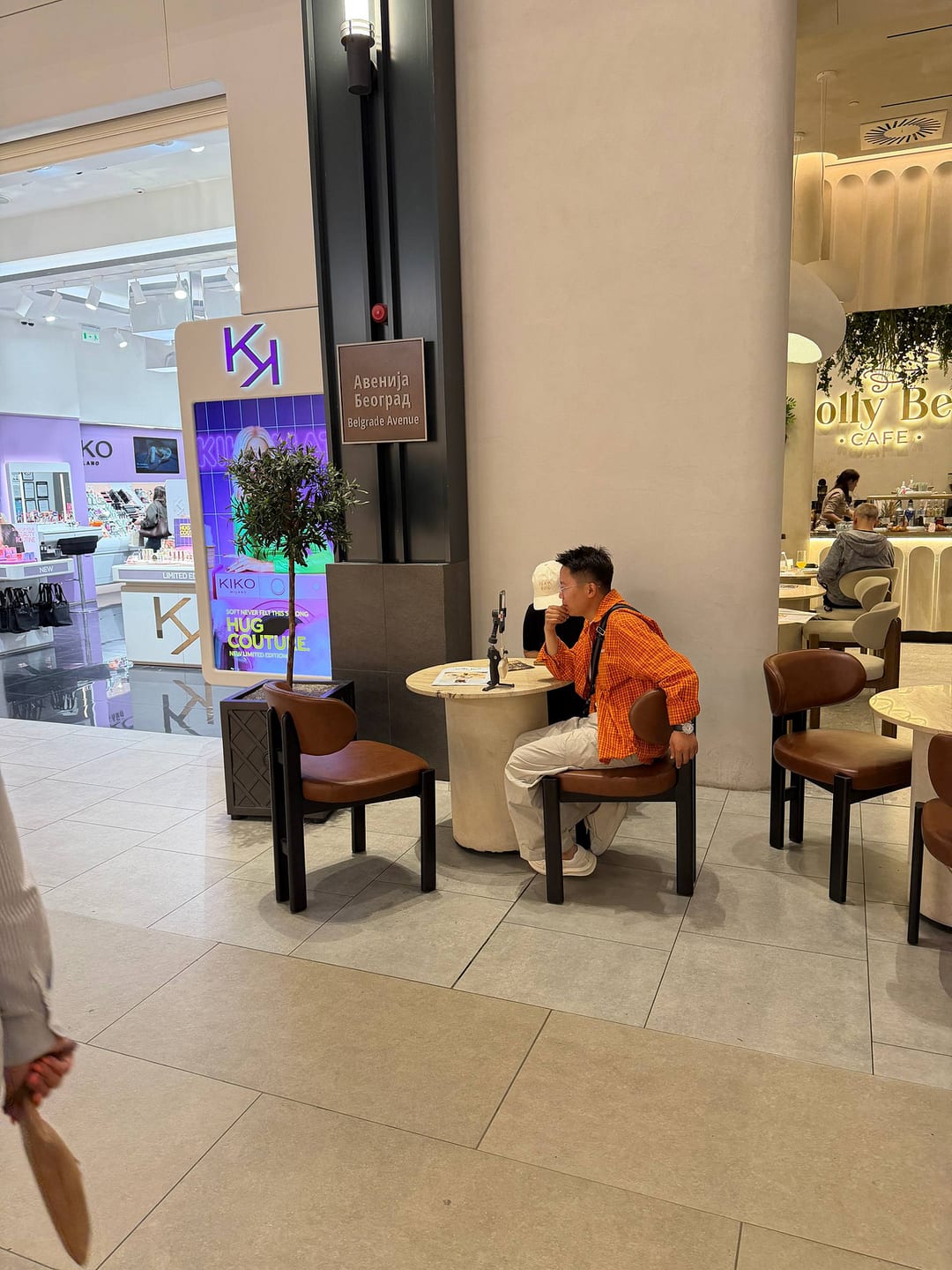
Honestly? We're not certain — and we'd rather say that plainly than hand you a tidy answer we can't back up. Most likely they're streamers making content. We can't rule out something less innocent, and we're not going to pretend the question is settled. What we're sure of is that spending your energy on who they are is solving the wrong problem.
When one photo of your face can be matched against millions, the person behind the lens barely matters. The footage outlives the moment, and your face is the part that keeps being findable. You can't control who points a camera at you in a city full of them. You can control how easy the result is to look up. That's the whole game. Start with the photos, then let something else mind the rest.
You can't stop the cameras. You can make the result harder to look up.
We find where your face is surfacing across the facial-recognition engines, file the removals, and keep monitoring so it stays gone — the tedious loop, handled.
Start your removals →