1960sYour life was on paper
Your details sat in paper files at the bank, the doctor's office and the local government. Finding something out about you usually took a trip and a person willing to look. Many homes shared a party line, so a neighbor could pick up and hear your call.

Stored about you in the 1960s
Kept in: Filing cabinets
- A credit file at a local bureau. As late as 1970, it was not unusual to walk in and see yours.
- Your Social Security number and earnings history.
- Bank ledgers and medical charts, kept at your branch and your doctor's office.
Your face: A print in a passport or a police file. Finding it meant going through the folders.
What moved rights forward
In Griswold v. Connecticut, the Supreme Court struck down a ban on contraception for married couples and recognized a constitutional right to privacy.
Katz v. United States held that a listening device on the outside of a phone booth was a search, because the Fourth Amendment protects people and not just places.
What moved them back
The FBI ran a secret program called COINTELPRO to disrupt people and groups it saw as threats. A Senate committee later found its targets included the Southern Christian Leadership Conference and Dr. Martin Luther King Jr.
1970sPeople found out they were being watched
Big organizations moved records onto computers, and most people had no idea what was in their files. Then Watergate made government surveillance front-page news.
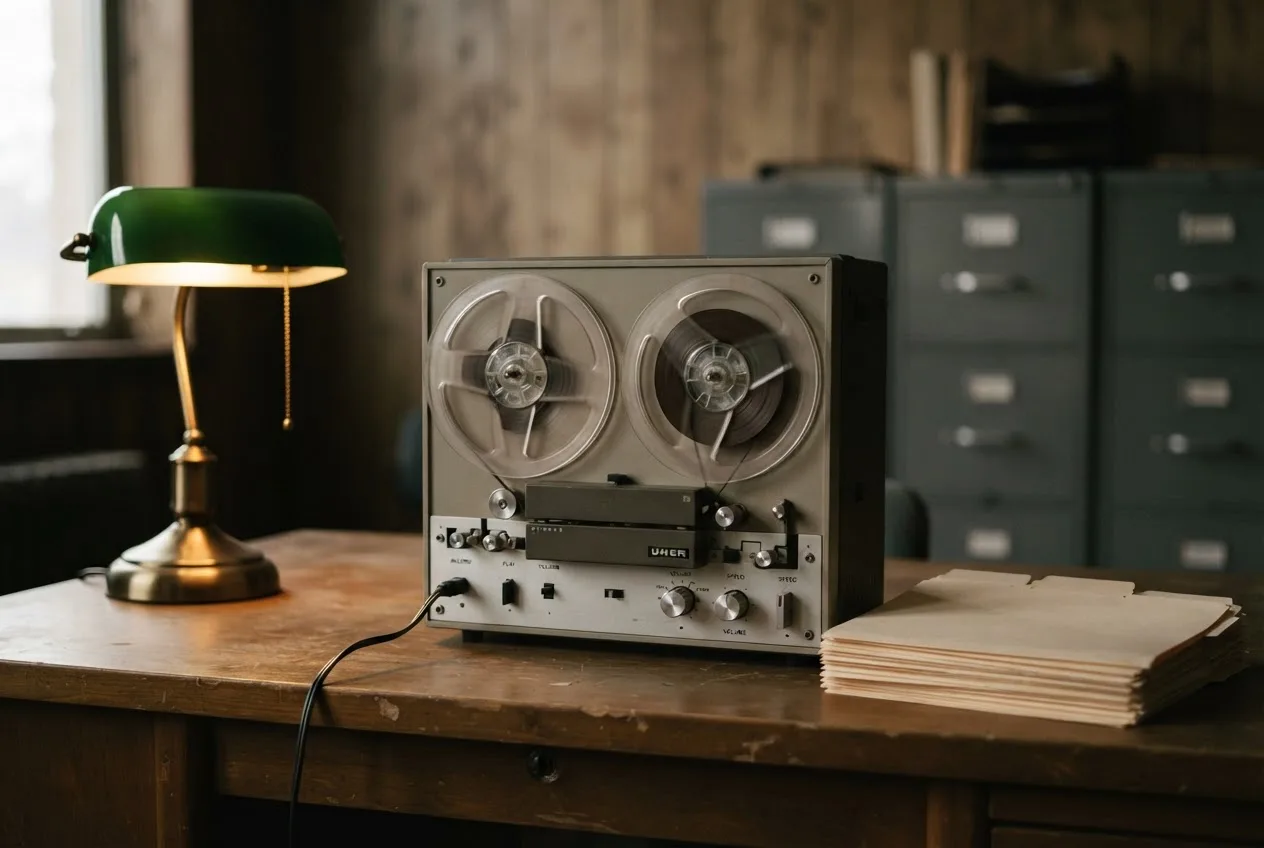
Stored about you in the 1970s
Kept in: Mainframes and tape
- Copies of your checks and deposit slips. A 1970 law made banks keep records, and in 1976 the Supreme Court said you had no legitimate expectation of privacy in them.
- The numbers you dialed, held by the phone company.
- Domestic intelligence files. The Church Committee found the FBI had built over 500,000 on Americans and domestic groups.
Your face: Still a print in a folder.
What moved rights forward
The Fair Credit Reporting Act limited who could see your credit report.
The Privacy Act let Americans see and correct what federal agencies held on them. It grew partly out of Watergate-era fears about illegal surveillance.
After the Senate's Church Committee investigated the intelligence agencies, Congress passed the Foreign Intelligence Surveillance Act, which created a special court to approve warrants.
What moved them back
In Smith v. Maryland, the Supreme Court said police did not need a warrant to record the numbers you dialed, because you had already shared them with the phone company. That reasoning shaped decades of cases about records held by other companies.
1980sYour habits started leaving a trail
Credit cards, bank machines and video store memberships all kept records of what you did. A few people had email. Most people still thought of privacy as closing the curtains.
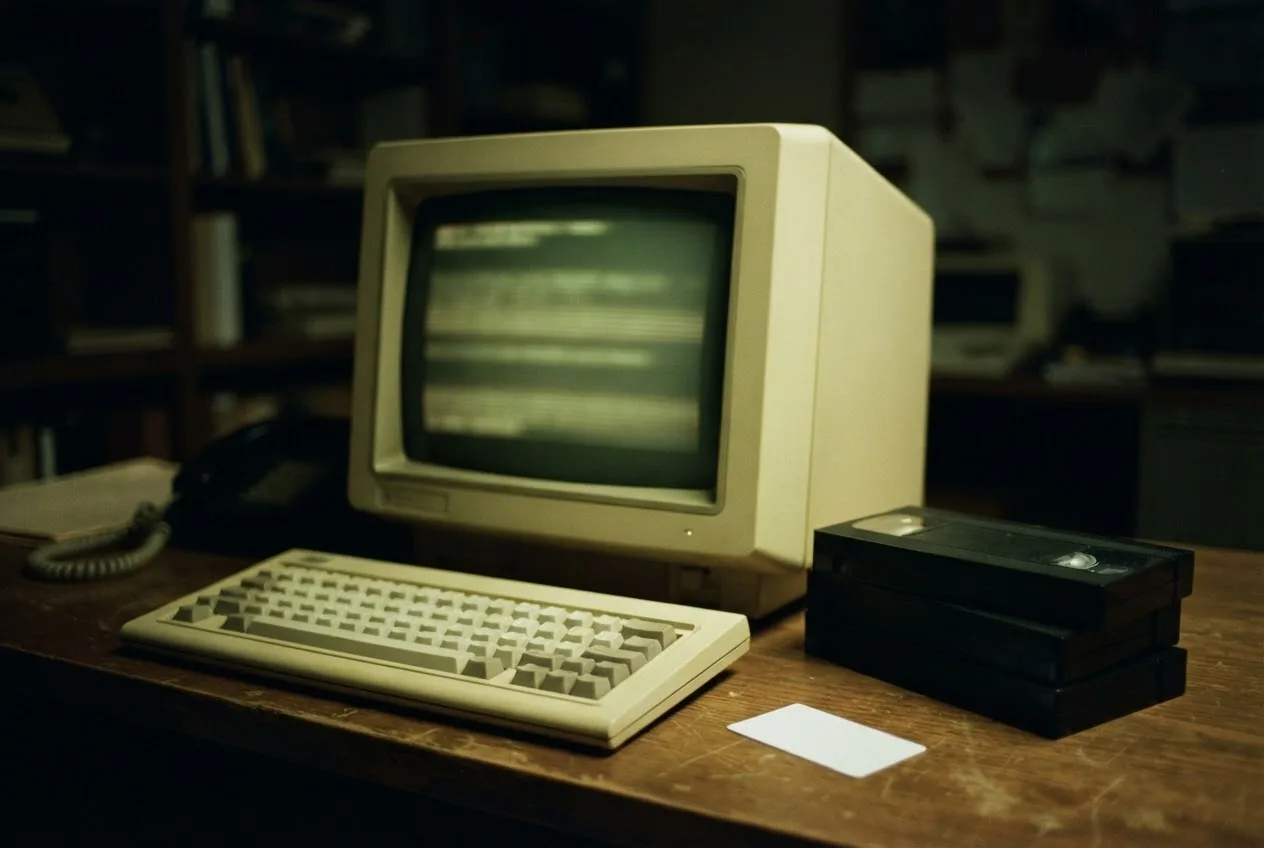
Stored about you in the 1980s
Kept in: Company databases
- Each card purchase and cash machine withdrawal.
- The films you rented, on your video store membership.
- What you watched on cable. A 1984 law limited what cable companies could do with it.
- Early email, sitting on a provider's server.
Your face: Still mostly prints, like the photo on your driver's license.
What moved rights forward
The OECD published privacy guidelines, and the Council of Europe's Convention 108 followed in 1981 as a binding treaty.
The Electronic Communications Privacy Act updated wiretap law for new technology.
A Washington newspaper printed the 146 films Judge Robert Bork's family had rented during his Supreme Court nomination, and Congress passed the Video Privacy Protection Act.
What moved them back
That same law treated email older than 180 days as abandoned, so the government could demand it with a subpoena or court order instead of a warrant. A Senate committee was still trying to fix that in 2012.
1990sEveryone came online
You heard the modem dial, you got your first email address, and you ordered something online for the first time. It felt anonymous, even though your provider knew who you were.
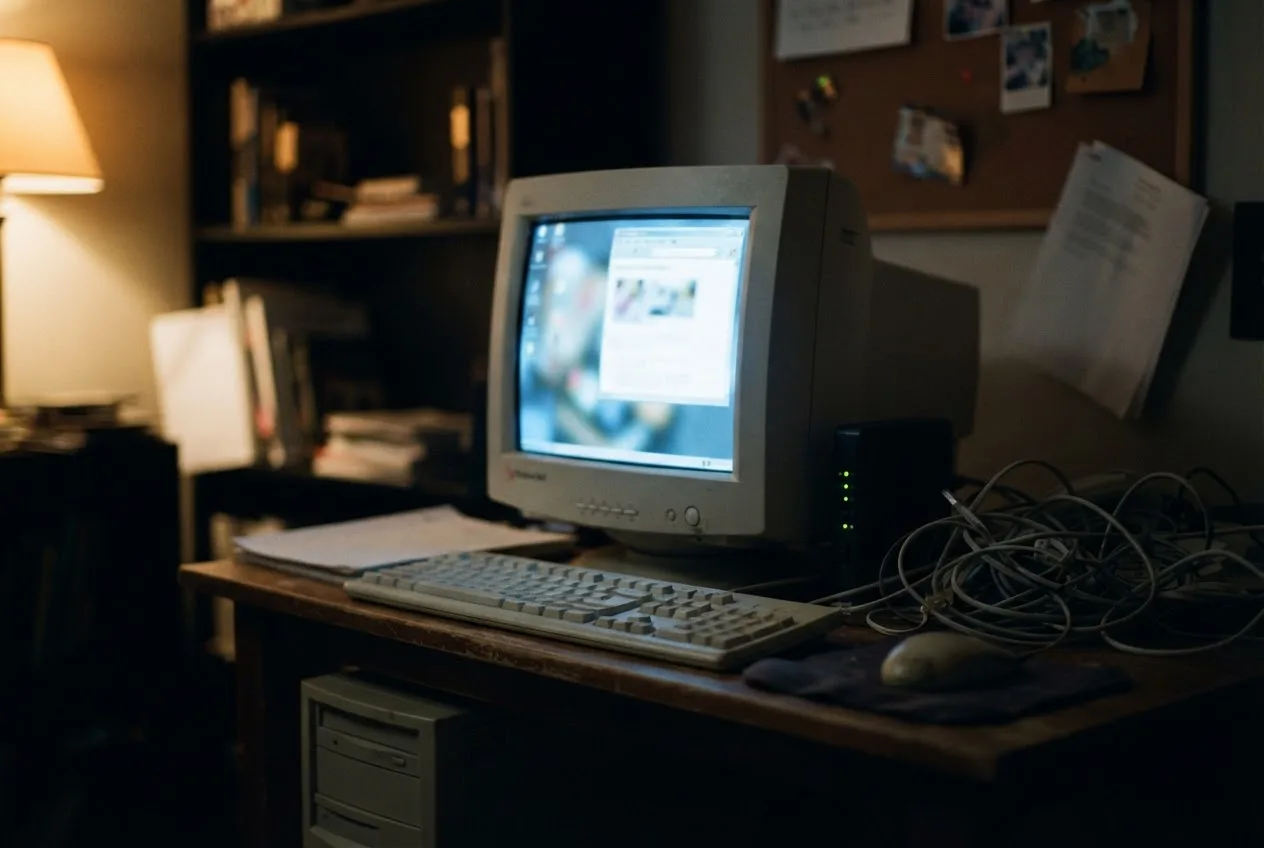
Stored about you in the 1990s
Kept in: Servers and cookies
- What you clicked. Ad networks used cookies to track browsing and build profiles, the FTC told Congress in 2000.
- Whatever a site asked you for. In a 1998 FTC survey, 92% of commercial sites collected personal information and 14% said anything about what they did with it.
- Your driver record, which many states were selling to people and businesses.
Your face: Test data. The Defense Department's FERET program collected 14,126 face images of 1,199 people to develop recognition software.
What moved rights forward
In 1989, a man found actress Rebecca Schaeffer's home address through California's motor vehicle records and killed her. Congress responded with the Driver's Privacy Protection Act.
The EU passed its Data Protection Directive.
HIPAA passed, which led to national rules for health information.
What moved them back
The Communications Assistance for Law Enforcement Act required phone companies to build their networks so that police could carry out wiretaps.
2000sFear on one side, sharing on the other
Phones got cameras, social networks took off, and millions of people started putting their own faces online. At the same time, security became the priority after September 11.
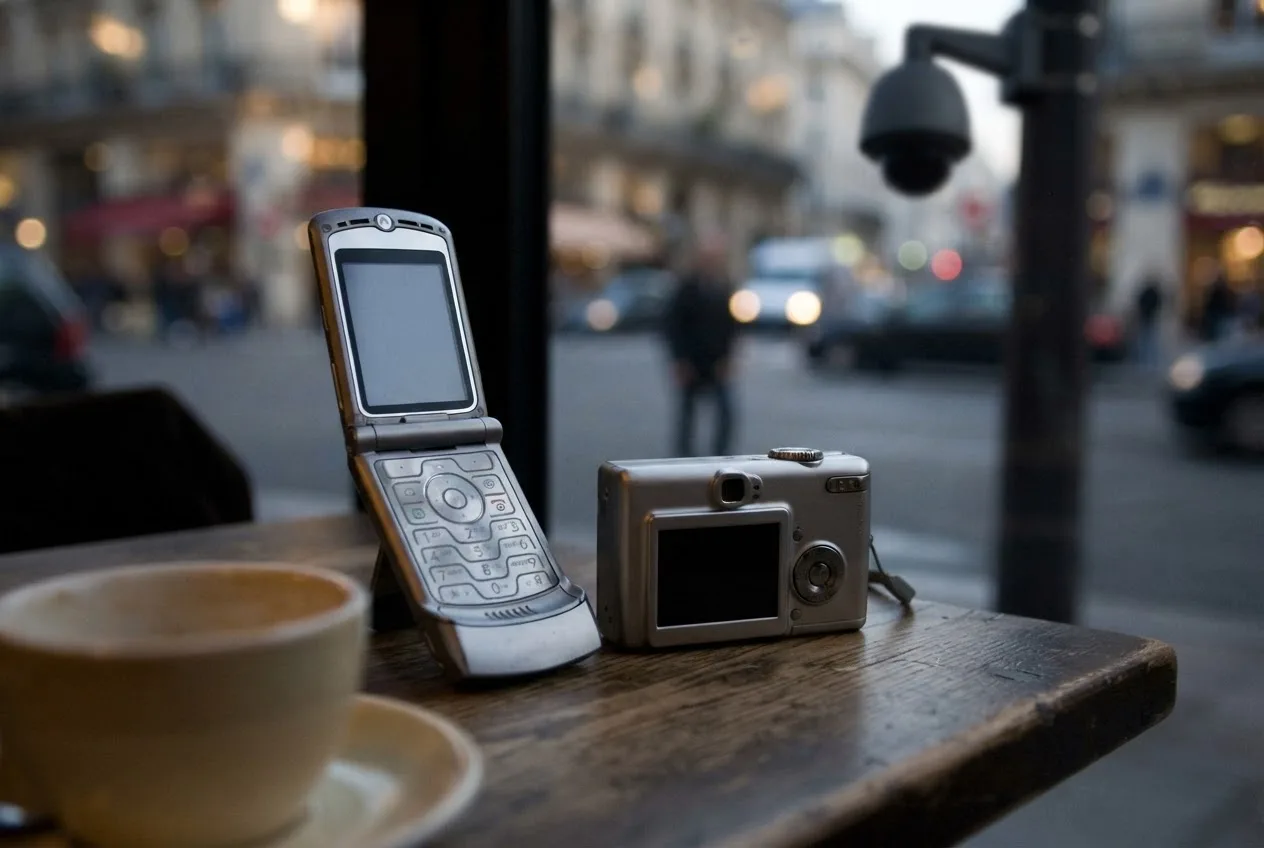
Stored about you in the 2000s
Kept in: Company data centers
- Everything you searched. In 2006, AOL released 20 million searches by over 650,000 users with the names removed, and the New York Times still matched searches to a real person.
- A time-stamped record each time your phone connected to a cell tower, which carriers collect and store.
- Your posts, friends and messages on social networks.
Your face: Photos you uploaded yourself, often with your name right beside them.
What moved rights forward
Illinois passed the Biometric Information Privacy Act, which requires consent before a company collects a scan of your face and lets people sue when it doesn't.
What moved them back
The USA PATRIOT Act widened the records the FBI could seek from the surveillance court and lowered the bar for getting them.
The data broker ChoicePoint disclosed a breach of more than 163,000 people's records. The FTC later counted at least 800 cases of identity theft.
2010sThe whole world in your pocket
Your phone knew where you were all day. Your photos got tagged and your friends got suggested. Most of it felt free, and it was hard to see who else had the data.
Stored about you in the 2010s
Kept in: The cloud
- Your location, all day. In one Supreme Court case, carriers produced 12,898 location points on one man over 127 days.
- Your call records: the numbers, date, time and length of calls. The NSA collected them in bulk for most Americans, without the conversations.
- A broker profile. One broker alone held 1.4 billion consumer transactions and 700 billion data elements, the FTC reported in 2014.
Your face: A face template. GAO reported in 2019 that the FBI's face recognition office could search over 641 million photos, and in 2021 Meta said it would delete Facebook's templates of more than a billion people.
What moved rights forward
Europe's top court said people could ask search engines to delist certain results about them.
After the phone records program came to light, Congress barred bulk collection of call records in the USA FREEDOM Act.
The GDPR began applying in May. In June, Carpenter v. United States held that police generally need a warrant for your phone's location records. California passed its own consumer privacy law the same year.
What moved them back
Reports revealed that the government was collecting Americans' phone records in bulk. A federal oversight board later found the program had no viable legal basis and little value against terrorism.
The FTC fined Facebook $5 billion for deceiving users about control of their data.
2020sYour face became a search box
You unlock your phone with your face, and a store camera might check it at the door. Anyone with one photo of you can now pay to search for it across the web.
Stored about you in the 2020s
Kept in: Cloud, cars and cameras
- Your driving. The FTC says GM collected location as often as every three seconds for some drivers and sold details like hard braking and late night driving.
- Your name on broker lists. California now counts over 650 registered data brokers.
- Your picture on a store's watchlist. The FTC says Rite Aid kept tens of thousands of images, with names attached, from its cameras, employees' phones and news stories.
Your face: A search result. Clearview AI's website claims over 100 billion images, and public face search engines let anyone upload one photo.
What moved rights forward
Texas secured $1.4 billion from Meta under its biometric law.
After European regulators fined Clearview AI, the EU banned scraping faces to build recognition databases, starting in February.
In June, the Supreme Court ruled in Chatrie v. United States that police carried out a search when they got a person's location data from Google. In August, data brokers had to start acting on deletion requests from California's DROP tool.
What moved them back
Detroit police wrongly arrested Robert Williams after a facial recognition match.
Canadian regulators found Clearview had scraped more than three billion images without consent.
The FTC said Rite Aid's system had falsely flagged shoppers as shoplifters, then banned it from using the technology for surveillance for five years.
What gets kept about you, and since when
Each bar starts at roughly the decade this became a routine record about an ordinary person, based on the events above. Almost nothing on this list has stopped being kept.
- Government ID and earnings records
- Credit history
- Bank and check records
- Numbers you dialed
- Card purchases
- Films and TV you watched
- Websites you visited
- Searches
- Posts, friends and photos
- Where your phone has been
- Face templates
- Your car's driving data
- Your face in a public search engine
The people who keep pushing back
Nonprofit groups have spent decades fighting for these rights in courts and in front of lawmakers, and we think they do great work. If this history matters to you, they are worth following and supporting.
- Electronic Frontier Foundation Founded 1990
Describes itself as “the leading nonprofit organization defending civil liberties in the digital world.”
- ACLU Founded 1920
Won a 2022 settlement that bars Clearview from giving most private companies in the US access to its database.
- EPIC Since 1994
The Electronic Privacy Information Center works on privacy through research, advocacy and lawsuits.
- Privacy International United Kingdom
Stepped into the UK's court case against Clearview to argue for people's privacy.
- noyb Vienna
A donation-funded group that takes companies to task under Europe's privacy law.
We aren't affiliated with any of them, and they haven't endorsed us.
Where FacePrivacy fits
Those groups work on the big picture: laws, lawsuits and regulators. We work on a much smaller piece of it, which is one person's face on a face search engine.
Even with these laws, someone still has to make the request. Each engine has its own form or address, its own rules for proof and its own timeline, and a face can come back after it's been removed.
Some of that work is manual, and we think that's right. Some requests can't be finished by software, so a person finishes them, and replies from these companies don't always fit a template. That care is a big part of what people pay us for. We can't promise how each engine will respond, and we don't remove original photos from the sites that posted them.
Want the 2020s part handled for you?
We file requests for people who don't have the time to do it themselves, and file them again when needed.
Opt my face out of face search →Facts in this post come from the Supreme Court of the United States, the US Senate and Congress, the Department of Justice, the Federal Trade Commission, the Federal Communications Commission, the Department of Health and Human Services, the Government Accountability Office, the National Institute of Standards and Technology, the Social Security Administration, the Privacy and Civil Liberties Oversight Board, the Court of Justice of the European Union, the European Commission, the OECD, the Council of Europe, Canada's privacy regulators, the Texas Attorney General, California's privacy agency and the groups named above. The figures for Clearview AI and Facebook are those companies' own. The Robert Williams case is from Michigan Public.