Road rage has always been scary in the moment and forgettable after it. The whole reason it stayed contained is that the anger had nowhere to go once the cars separated. Two strangers, a few seconds of fury, and then the anonymity of traffic swallowed you both. Face search quietly removed that safety valve.
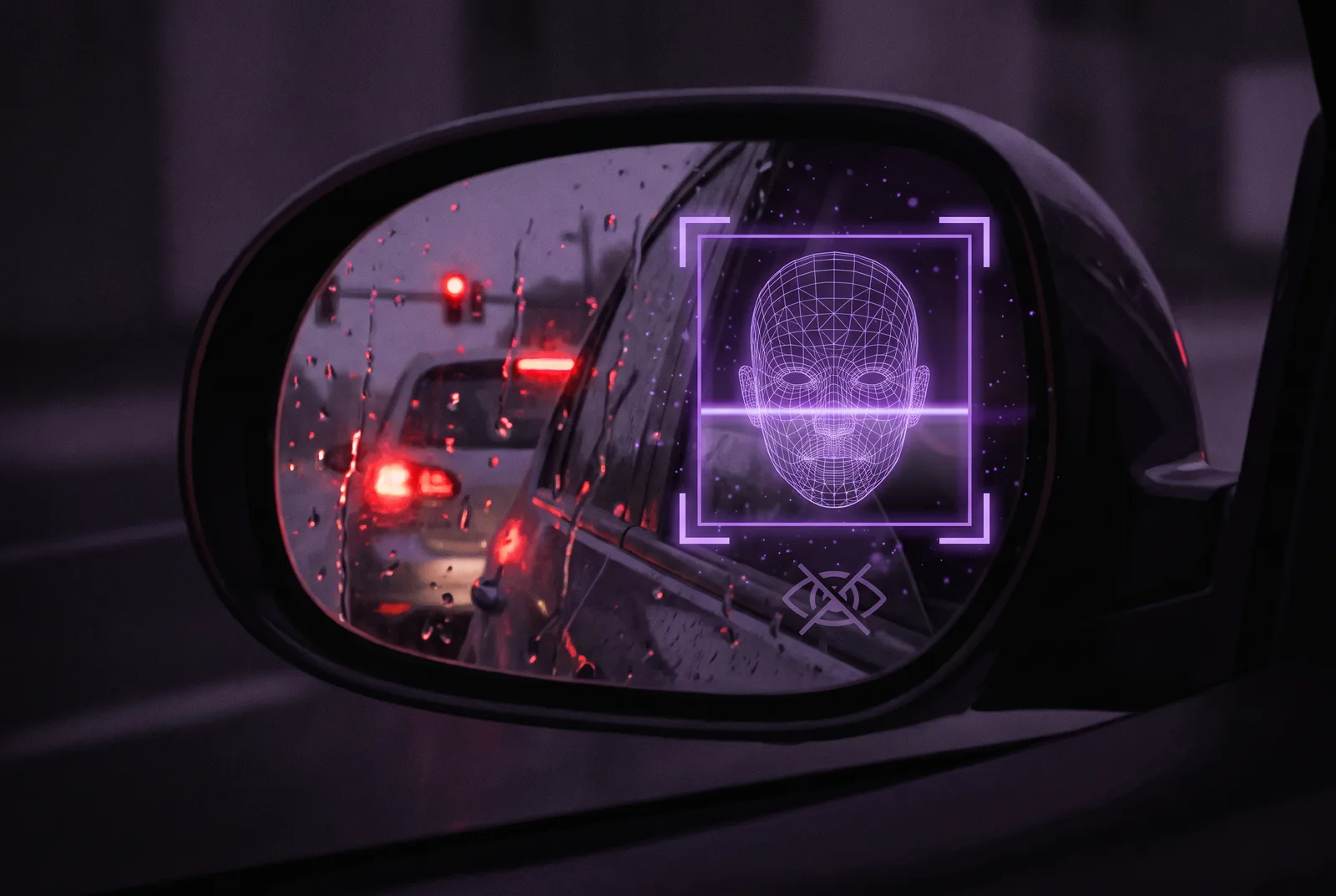
It used to end at the next turn
Think about why traffic disputes rarely escalated past the shouting. To do anything more, the other person needed to identify you, and the road gave them almost nothing to work with. Your plate was a dead end — legally gated behind the DMV. Your name wasn’t written on your car. And physically following you was risky, obvious, and easy to lose. The friction was the protection. Most anger simply burned out before it could find a target.
Face search deleted the friction. The one thing you can’t hide in a car — your face, lit up behind the windshield — became the one identifier with no gate in front of it.
One frame is all they keep
Everyone has a camera now, and a lot of cars have several. A phone held up at the light, a dashcam that caught your face as you passed, a doorbell or parking-lot camera from wherever the two of you ended up — any one clear frame is enough. The angry driver doesn’t need a good photo of your car. They need a good photo of you.
From there the path is the same one every stranger now has access to:
- Face → name. The engine matches the frame to a tagged photo or an old profile and returns who you are.
- Name → address. A people-search broker turns the name into your street, your phone, and the people you live near.
- Time and cost: a few minutes and about a dollar — done from their couch, hours after the incident, when they’ve had time to stew.
They don’t follow you anymore — the databases do
The old nightmare was being tailed: headlights that don’t turn off when you do, someone matching every lane change. It was frightening but at least visible — you could see it happening and react. The new version is invisible. Nobody follows you. You get home, you relax, and the person who was angry at you three hours ago is quietly typing your face into a search box, letting the databases do the following you’d normally be able to see.
Why “just drive away” stopped working
The standard advice for road rage is still good advice: don’t engage, don’t make eye contact, put distance between you, drive to a public place. All of it assumes the danger ends when the cars part. That assumption is what broke. You can do everything right in the moment — stay calm, drive off, lose them in traffic — and still be identifiable afterward, because the exposure isn’t on the road. It’s in an index, sitting there whether you engaged or not.
You can’t de-escalate a database. The only way to make “drive away” work again is to make sure that when your face gets searched later, it doesn’t resolve to anything.
Take your face off the map
That’s what FacePrivacy does. We file opt-out and removal requests with the major facial-recognition engines — PimEyes, FaceCheck.ID, Lenso.ai and the rest — log the confirmations, and re-file when a new scrape puts you back. We can’t stop someone from being angry in traffic. What we can do is make sure that when they try to turn your face into your front door, the search comes back empty and the anger has nowhere to travel.
The confrontation should end where it always did — at the light. Keeping your faceprint out of the index is how you put it back there.
Let the confrontation end at the light.
FacePrivacy removes your faceprint from the major face-search engines and keeps it removed — so a heated moment in traffic can’t become a knock at your door.
Protect your face →