For as long as cars have been stolen, theft has mostly been a crime of opportunity. Thieves worked a lot, a street, a neighborhood, and took whatever was unlocked, unwatched, or easy. They rarely got to choose a specific car and then go get it, because they had no way to connect a car they liked to a place they could find it. Face search closed that gap.
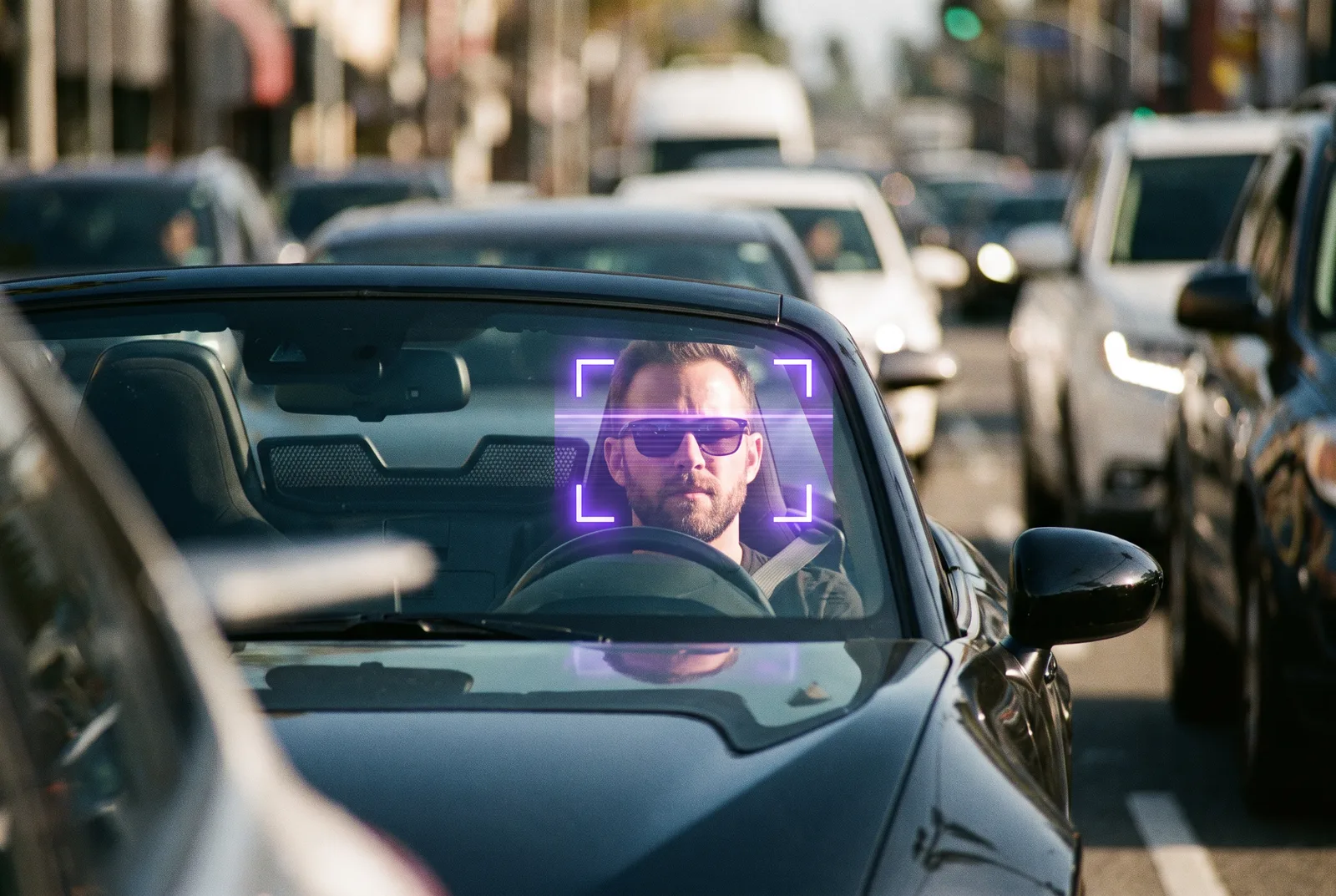
Theft used to be a numbers game
The economics of car theft rested on randomness. A thief couldn’t reliably target the specific model, trim, or spec they wanted — they worked probabilities, cruising areas where the odds were good and grabbing whatever the night offered. Wanting a particular car was useless, because “that one” and “where that one lives” were two facts that almost never connected for a stranger.
Everything that made theft opportunistic was really just a lookup problem: no way to go from a car in motion to a car at rest. That problem is now solved, and not by anything to do with cars.
Now they can shop
The windshield gives up the one thing the plate never would: the driver’s face, unprotected and in plain view. And unlike a plate, a face has no gate in front of it. Anyone can drop a photo into a face engine for about a dollar and get a name back. That single change flips theft from opportunistic to selective:
- Pick the car. The desirable model is right there in traffic — and so is the driver’s face.
- Photo → name. The face-search engine ties the windshield shot to a name.
- Name → address. A people-search site returns where they live — and where the car parks.
The thief no longer hopes to stumble onto a car like yours. They can decide they want yours and find out where to go.
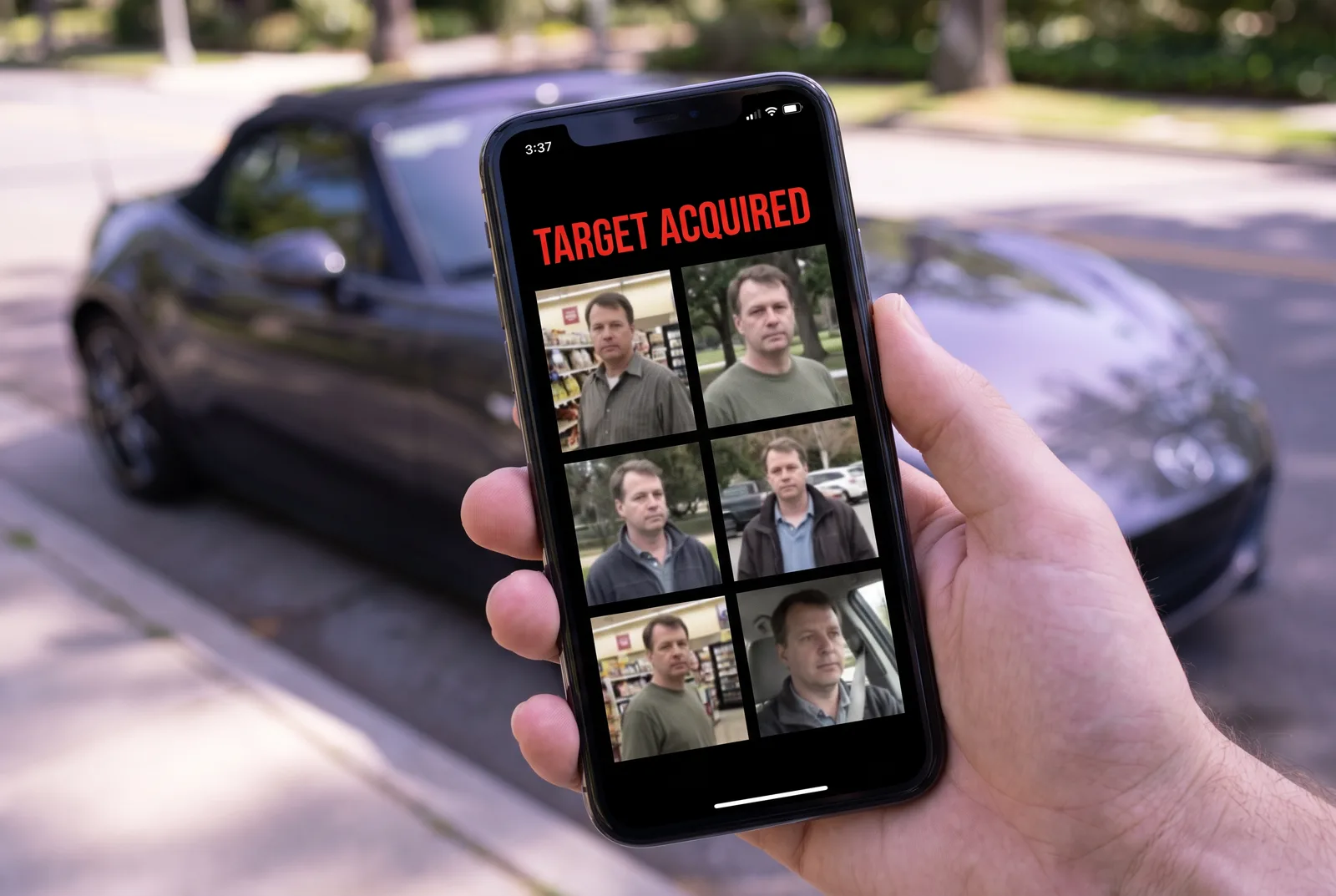
From your face to your driveway
A home address is the piece that makes everything downstream easier. A car sitting in the same driveway every night can be watched, planned around, and taken on the thief’s schedule instead of by luck — and modern theft methods reward exactly that kind of patience. Relay attacks on keyless entry, for instance, work best when someone knows which house to stand outside of; knowing the address turns a technique that needs proximity into one that needs only a visit.
None of that requires the thief to have followed you, staked out your street, or known you at all. The whole chain runs on one photo taken through glass, at a light, in the seconds before it turned green.
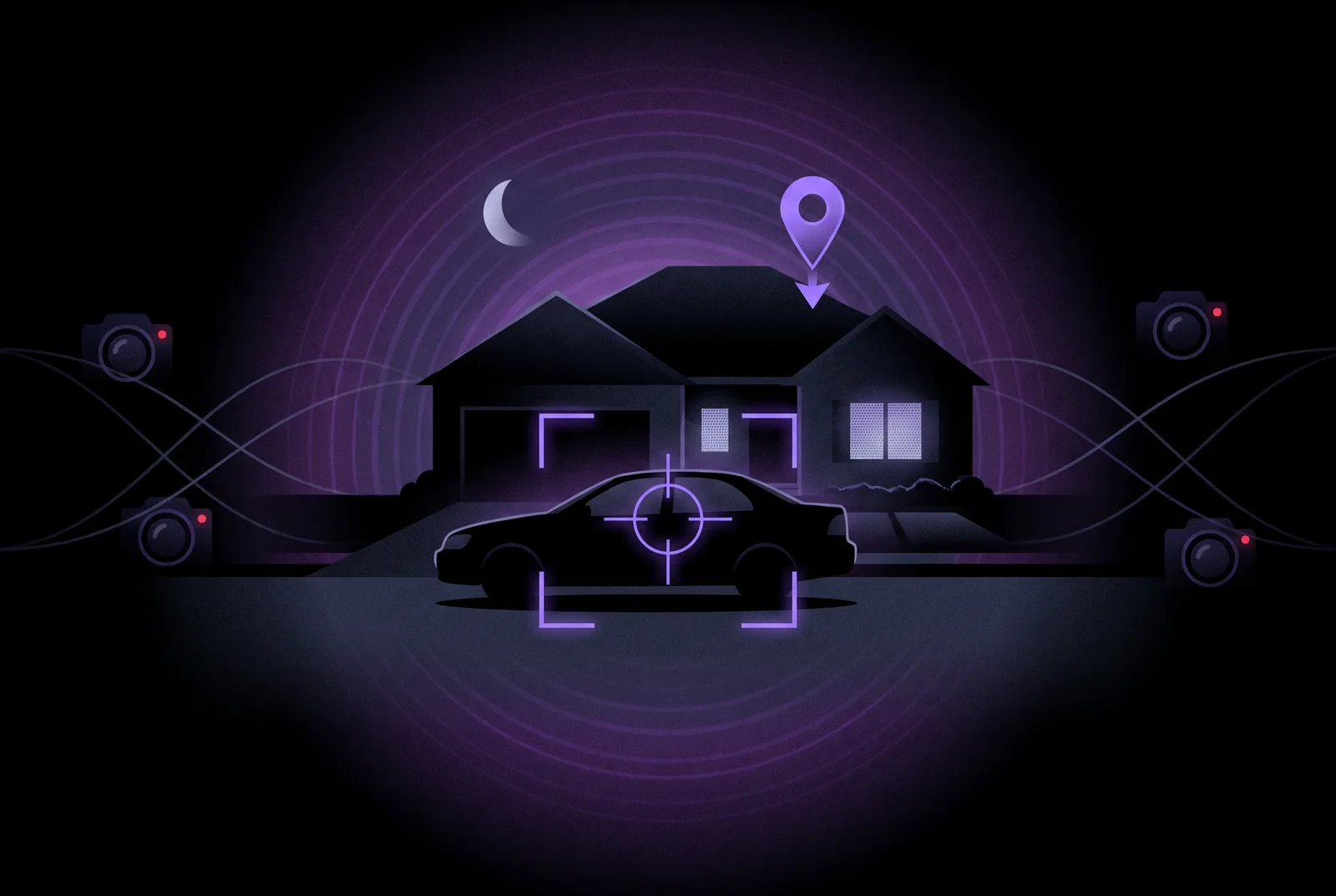
Locks and trackers don’t fix a location leak
The instinct is to harden the car — a wheel lock, a Faraday pouch for the key fob, a GPS tracker, a camera. Those are worth having, and they raise the effort of the theft itself. But none of them touches the part that made your specific car a target: the fact that a stranger could turn your face into your address. A tracker tells you the car is being taken; it doesn’t stop someone from knowing where to find it in the first place.
The leak isn’t in your driveway. It’s in a searchable index of your face — and that’s the one thing a lock can’t reach.
Get your face out of the index
That’s the job FacePrivacy does. We file opt-out and removal requests with the major facial-recognition engines — PimEyes, FaceCheck.ID, Lenso.ai and the rest — log the confirmations, and re-file when a fresh scrape puts you back. We can’t stop a thief from admiring your car at a light. What we can do is make sure the photo of you behind the wheel doesn’t resolve to a name — so the car they picked never gets an address, and stays just another car in traffic.
Harden the car if you want to. Just remember the target was painted by your face, and that’s the part removal actually fixes.
Don’t let your face put your car on a map.
FacePrivacy removes your faceprint from the major face-search engines and keeps it removed — so a photo of you at a light can’t become the address where your car parks.
Protect your face →