Most surveillance arguments happen in the abstract. This one is happening with ladders and bolt cutters. Something about a small black camera on a pole at the end of an ordinary street has pushed a lot of otherwise unbothered people into direct action, and it is worth working out exactly what they object to, because the company's rebuttal is not a lie. It is just an answer to a narrower question than the one being asked.
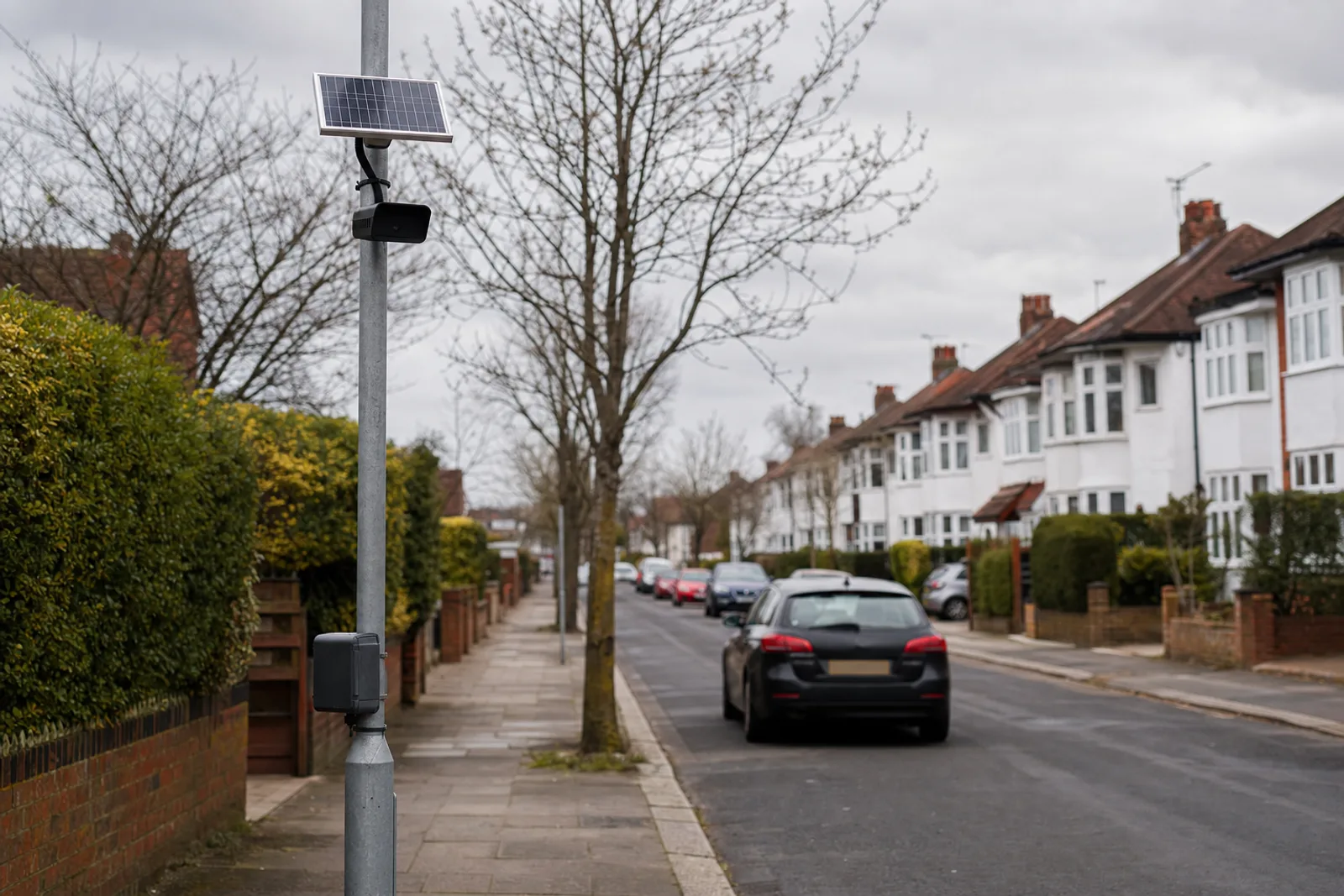
The year people started cutting them down
By mid-2026 there had been dozens of separate acts of vandalism against Flock cameras spread across roughly two dozen states — not one organised campaign but the same idea occurring independently to a lot of people at once. That is unusual. Speed cameras get hated and survive. Doorbell cameras multiplied without much resistance at all. Something about this particular deployment reads differently to the people living underneath it.
The institutional version of the same reaction has been quieter and more consequential. Santa Cruz voted to end its contract in January. Mountain View's police chief discontinued use in February. Framingham declined to renew in June. The ACLU has been running a campaign against automated licence plate readers with the deliberately unsubtle name Get the Flock Out. These are not fringe positions any more; they are procurement decisions being reversed by the same councils that approved them.
What makes those reversals interesting is that they are rarely about a specific scandal in that town. They are about what the network becomes once enough towns join it.
What the network actually records
A Flock camera watches a road and photographs vehicles passing it. It reads the plate, and it also records what the company calls vehicle fingerprint attributes: make, colour, body type, roof racks, bumper stickers, damage, anything that distinguishes one silver sedan from the next silver sedan. Each sighting becomes a timestamped record of a described vehicle at a known point.
One camera is close to meaningless. It tells you a car went past a junction. The system's actual product is what happens when tens of thousands of those cameras share a searchable back end across jurisdictions, so a single query returns everywhere a described vehicle has been seen, across cities that never individually voted on the others.
That is the shift people are reacting to, and it is a shift in kind rather than degree. A camera on a pole observes a public road, which nobody has a strong claim to privacy on. A national index of timestamped movements, retained and queryable after the fact, answers questions no observer on that road could ever answer: where you go on Tuesdays, which building you visit fortnightly, whose driveway your car sat in overnight. Nothing in that sentence requires anyone to know your name.
The facial recognition claim, examined
Flock's public position is that it does not run facial recognition, that its searches key on vehicles rather than people, and that the system cannot identify or track individuals. Take that at face value. There is no reason to assume a faceprint database is running quietly behind it, and the argument does not need one.
The claim is a statement about method that gets heard as a statement about outcome. It says: we do not compute a mathematical representation of your face and match it against a gallery. It does not say: we cannot work out where you have been. Those come apart immediately in practice, because a car is a very good proxy for a person. Most vehicles are driven overwhelmingly by one household, often one individual. Track the car with perfect fidelity and never once look at a face, and you have tracked the person.
This is a pattern worth learning to spot generally, because the face-search industry runs the same play. Companies describe the technique they avoid rather than the capability they provide, and the technique sounds like the reassurance. Ask what the system can tell someone who queries it, not which algorithm it declined to use getting there.
Describing a person without naming them
The place this gets genuinely uncomfortable is a capability reported under the name FreeForm, which lets an operator search footage using a plain-language description of a person rather than a vehicle: what they were wearing, visible tattoos, and — according to reporting on the feature — characteristics including race.
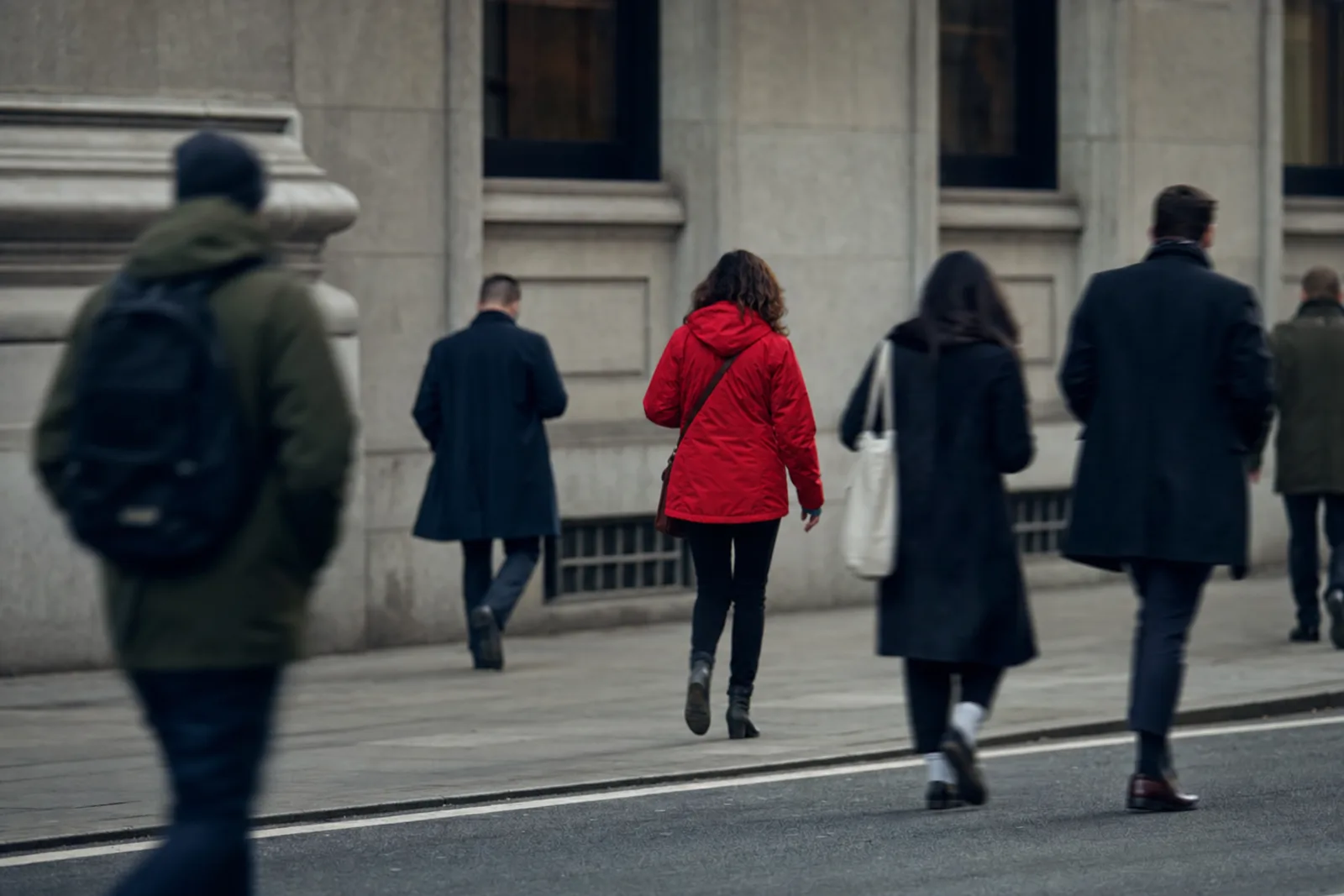
No faceprint is computed there either. The technical claim survives intact. But a system that finds a person by description is doing the thing that facial recognition is feared for, using a different key. If you can pull every camera hit matching man in a red jacket with a forearm tattoo, near this block, that afternoon, the absence of a face template is a footnote. You have person-search.
And description-based search carries a failure mode that face matching does not, which is that it is coarse by construction. A faceprint match at least aspires to be about one specific individual and can be evaluated as right or wrong. A clothing-and-build description sweeps in everyone who resembles the description, and the people caught by that net are not distributed evenly across a population. Searching by race is not a bug in an otherwise neutral tool; it is a category the tool was given.
There has also been reporting that officers have run searches supporting immigration enforcement in ways that sit uneasily with the company's stated policies on data sharing. Policy at the vendor level and practice at the terminal level are separate things, and the second one is what actually happens to you.
The part Flock doesn't have
Here is the structural point, and it is the reason we write about a camera network on a site about faces.
Everything above produces records about a described entity. A silver hatchback with a dented wing. A person in a red jacket. Those records are enormously revealing about movement and enormously unhelpful for the question who is this. Turning them into a name requires a separate lookup — a plate run against a registry, which is gated by law and access control and leaves an audit trail.
Your face is the one identifier in this whole picture with no gate on it at all. Somebody who photographs you can put that photo into a consumer face-search engine and get back your name, your employer, your old profiles, and enough to find your address, for the price of a coffee, with no credential, no warrant, and no record that it happened. The plate is regulated. The faceprint is not.
So the two systems have exactly complementary weaknesses. The camera network knows where a vehicle went but not who you are. Face search knows who you are but not where you have been. Neither is complete on its own, and the join between them is a photograph of your face — which is the only element of the pair that is currently sitting in public indexes, unregulated, waiting to be queried by anyone at all.
What you can and cannot switch off
We are not going to pretend our product solves this one, because half of it is not a technology problem.
You cannot opt out of a camera on a public road. There is no removal request, no unsubscribe link, no setting. The cameras exist because a council signed a contract, which means the lever is a municipal one: public records requests about what your town has deployed and what the retention period is, showing up at the meeting where renewal is voted, asking who outside your jurisdiction can query the data your town collects. Several towns have reversed course this year precisely because people did that. It is slow and it is unglamorous and it is the actual mechanism.
You can control whether your face resolves to your name. That half is not municipal policy. It is a set of commercial databases that scraped your photos, and they have removal processes — awkward, inconsistent, individually documented processes, which is the entire reason this company exists. Getting out of them does not stop a camera recording your car. It removes the free, unaudited shortcut from an image of a person to this specific person, who lives here.
That is a narrower win than making the cameras disappear. It is also the only half of the problem where an individual acting alone can change the outcome this month. The infrastructure argument will take years and will be won or lost in council chambers. The identification layer is available to you right now.
Close the lookup, not the camera
FacePrivacy finds where your face is indexed across the major face-search engines and files removals to get you out, then keeps checking so a fresh scrape doesn't quietly put you back.
Check my exposure