We argued in the companion piece to this one that the camera network is a municipal problem rather than a personal one — that the lever is a council meeting rather than a settings page. That is easy to say and useless without the next step, which is knowing what your town has actually deployed. This is that step. It is genuinely doable in an evening, and the results are usually more specific than people expect.
Why this is worth an hour
Two reasons, one obvious and one less so.
The obvious one is that you cannot have an opinion about a system you cannot see. Renewal votes happen on the assumption that nobody is watching, and the towns that reversed course this year did so because somebody turned up with specifics — camera counts, retention periods, the list of outside agencies with query access. Vague unease loses those arguments. Numbers win them.
The less obvious reason is that what you find recalibrates your sense of the whole problem. People tend to imagine either a couple of cameras at the main junction or total omniscient coverage, and it is usually neither. Seeing the actual footprint — and, more importantly, the actual search volume — tells you whether the system near you is a rarely-used investigative tool or a routinely queried movement database. Those are very different things wearing the same hardware.
1. The crowdsourced map
Start with DeFlock, a volunteer project that maps automated licence plate readers on top of OpenStreetMap. People photograph cameras, log the location and direction, and the result is a browsable map of documented ALPR positions.
The strength is specificity: individual poles, often with the direction of travel they cover. The weakness is coverage, and you should hold this firmly in mind — it is volunteer-built, so it is dense where somebody took an interest and empty where nobody has walked around yet. An empty area on the map means nobody has logged cameras there, not that there are none. Treat a hit as reliable evidence and a blank as no information at all.
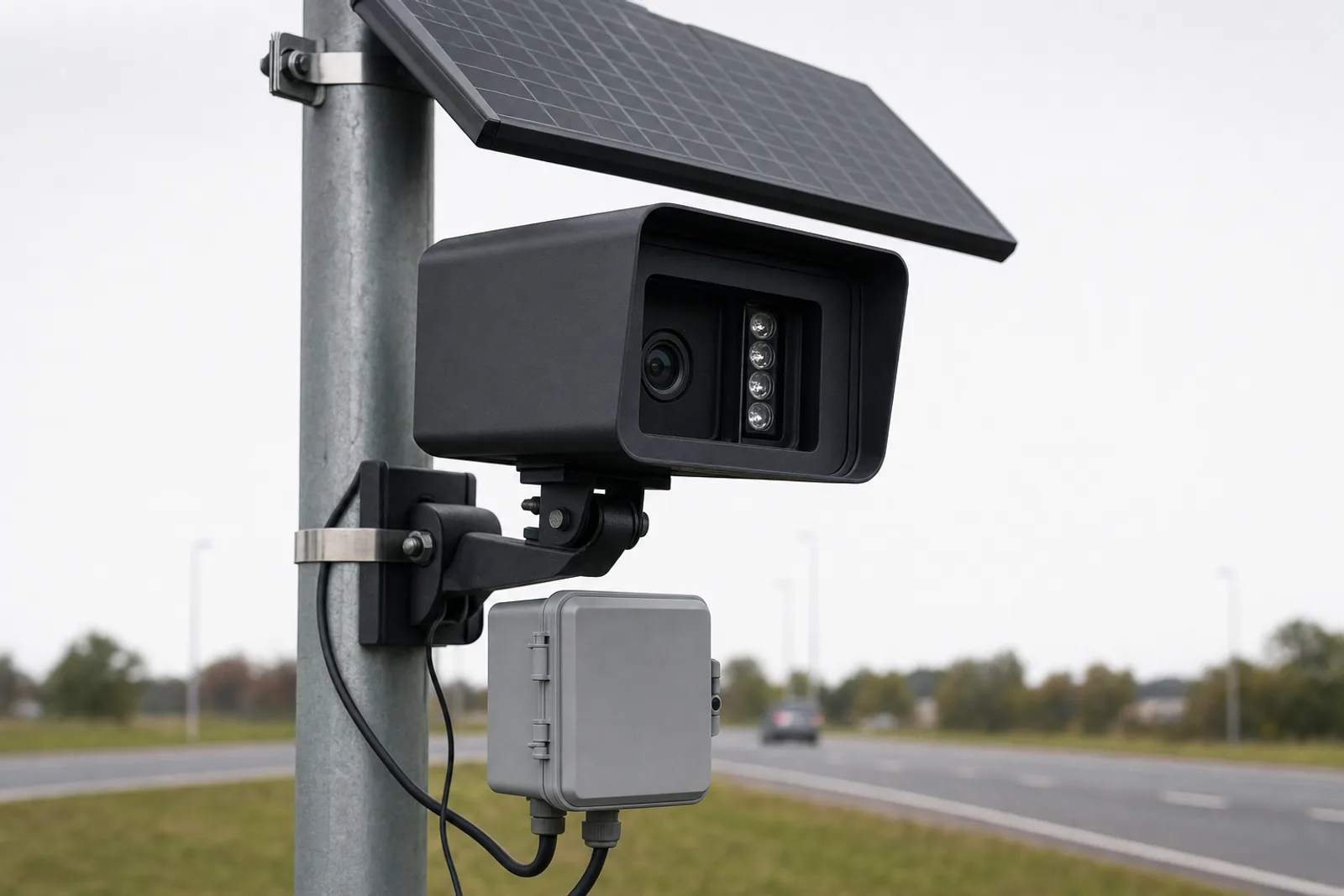
Once you know what the hardware looks like, you will start noticing it. The typical unit is a small dark rectangular camera on a slim pole, frequently solar-panelled with a battery box, positioned to catch traffic on one approach. They are often on the shoulder of a road rather than overhead, which is why people walk past them for months.
2. The vendor's own portal
Flock offers its customers an opt-in public page, and a surprising number of agencies enable it. They are published at addresses following the pattern transparency.flocksafety.com/<jurisdiction>, so the fastest route is searching your city or county name together with “Flock transparency portal”.
What you typically get is the number of devices, what the agency says it uses them for, the stated retention period, and — the interesting part — some accounting of search activity and which outside agencies the data is shared with.
Two caveats. It is opt-in, so no portal means nothing either way; plenty of agencies with cameras publish nothing. And it is the vendor's framing of the vendor's product, which is worth remembering when you read the categories. It is still the single richest free source available, and it is published by the operator, which makes it hard to dismiss when you quote it back at a council meeting.
3. The search audits
This is the step most people skip and the one that actually changes minds.
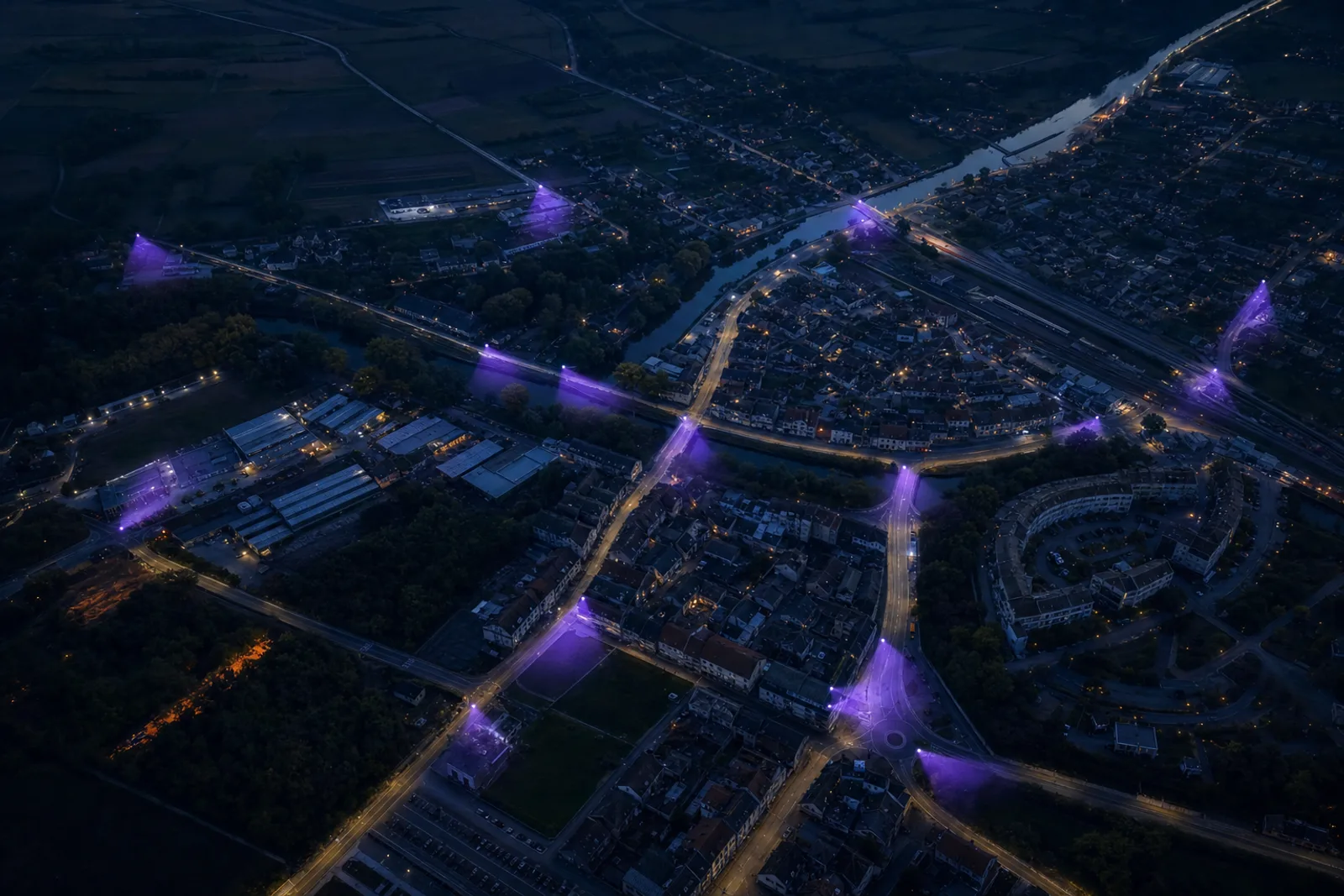
Independent projects have been aggregating the data from those transparency portals across the country — Eyes on Flock is the notable one — which turns a scattering of individual pages into something comparable. And separately, “Have I Been Flocked?” collects published audits of agency usage, so you can check whether your local department has a contract at all.
Aggregation matters because the meaningful questions are comparative. Is your town's search volume normal for its population, or an order of magnitude higher? Are the stated reasons for searches specific, or is a large share logged under something generic? How many agencies outside your state can query the data your town collects? A single portal cannot answer any of that. A national picture can, and the answers are frequently the thing that makes a councillor sit up.
4. The records request
If there is no portal, or the portal is thin, the fallback is a public records request to your police department or city clerk. Agencies are generally not required to publish camera locations proactively, but the underlying records are usually subject to your state's public records law.
Ask narrowly and concretely, because broad requests get slow-walked and vague ones get refused. The things worth naming specifically:
- The current contract with the vendor, including cost and term
- The number and locations of installed devices
- The retention period for stored reads
- The policy governing what constitutes an authorised search
- Audit logs of searches for a defined recent period — counts and stated reasons, not personal data
- A list of agencies outside your jurisdiction granted query access
The ACLU publishes a toolkit for exactly this, with model language, as part of its campaign on the issue. Using a template is not a weakness here; these requests work better when they cite the statute correctly and ask for records that plainly exist.
Reading what you get back
Three things to look for once the material arrives.
Retention is the whole ballgame. A system that discards reads after a few days is a tool for responding to a specific incident. One that keeps them for a year or more is a historical movement database, and it can answer questions about the past that nobody thought to ask at the time. Same cameras, entirely different instrument, and the difference is a single number in a settings page.
Sharing determines who is actually watching. Your council authorised your department. The relevant question is how far beyond that the query access extends, because a network's value to its customers is precisely that it is not limited to one town. This is where the reporting about searches supporting immigration enforcement came from, and it is the field most likely to surprise the people who voted for the contract.
Justification categories reveal the real usage. If a large fraction of searches are logged as “investigation” with no case number, the audit trail is decorative. Specific, case-linked justifications suggest a system under actual discipline. This is the difference between a policy that exists and a policy that binds.
And then the part about your face
Do all of the above and you will know your street better than almost anyone on it. You will also arrive at the limit we keep running into: none of it is something you can switch off. Public roads, municipal contracts, collective decisions. The remedy is showing up, and it is worth doing, and it operates on a timescale of years.
Which is why it is worth being clear about the one part of this that does have a switch. Everything above produces records about a vehicle. Turning any of it into you means getting from an image or a plate to a name — and for plates, that step is gated by a registry, access controls and law.
Your face has no such gate. A photograph of you, run through a consumer face-search engine, returns your name and enough beyond it to find your address, for the price of a coffee, with no credential and no record that the search happened. That lookup is not run by your city, it is not subject to a council vote, and it does not need a camera on a pole — a phone at a red light is sufficient.
Map the cameras. Turn up to the meeting. Ask for the audit logs. And in the meantime, close the one door in this whole system that is actually yours to close.
The cameras take a vote. The lookup takes an afternoon.
FacePrivacy finds where your face is indexed across the major face-search engines and files removals to get you out, then keeps checking so a fresh scrape doesn't quietly put you back.
Check my exposure