Fame is the wrong frame for this. Face search was never built for celebrities, who have publicists and lawyers and are easy to find anyway. It was built for everyone else, which is to say it was built for the person reading this. The tools are cheap, the results are fast, and the only input required is a picture of you that already exists.
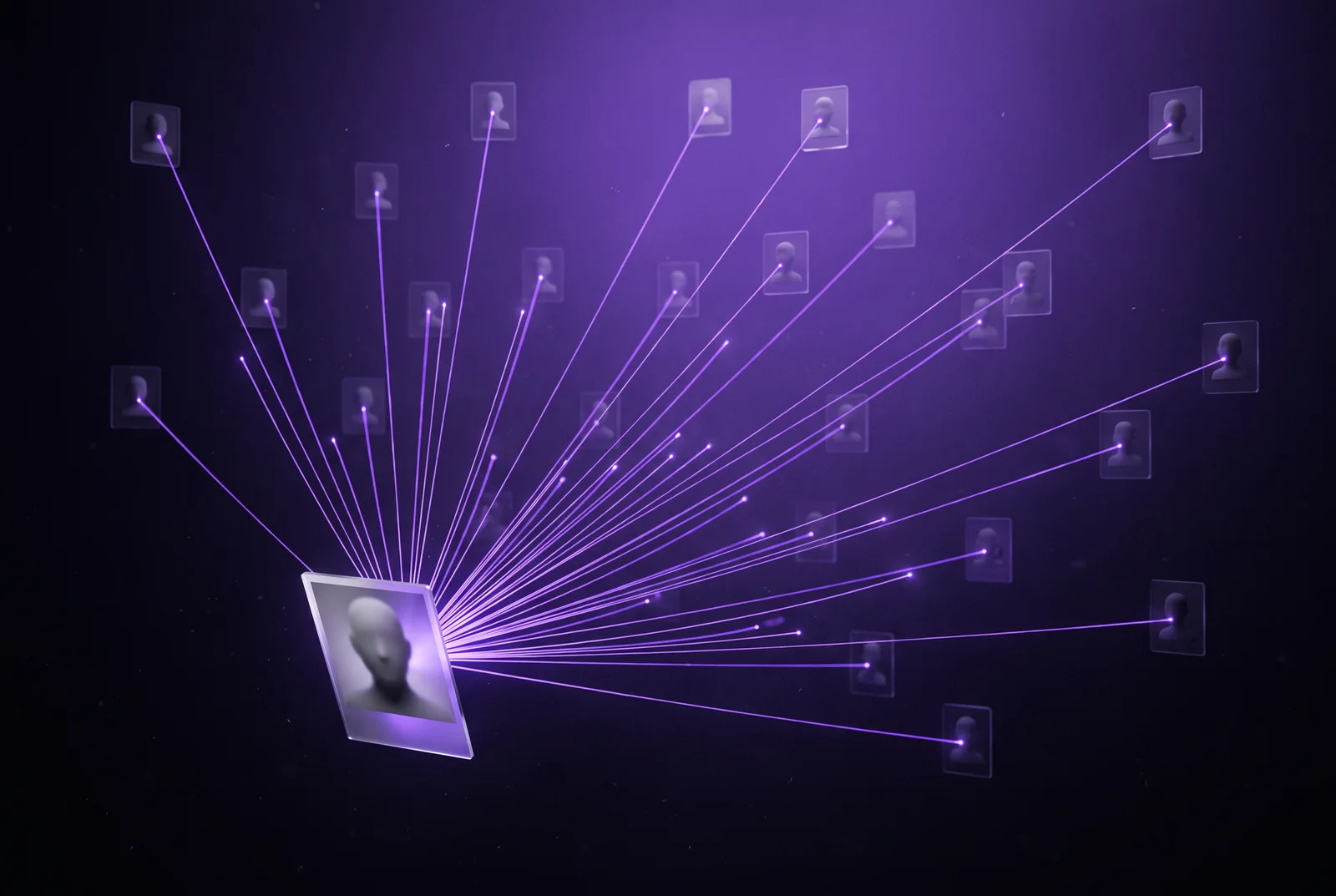
This piece is about the gap between how safe people feel and how exposed they are, why that gap exists, and the small number of things that actually close it. None of them involve deleting yourself from the internet, which you cannot do anyway.
The comforting lie, and why it is so comfortable
Nobody is looking for me feels true because it describes your experience accurately. Nobody has looked for you, as far as you know. You have no enemies, no fame, no reason anyone would type your name into anything. The sentence is not really a claim about face search. It is a claim about your own unremarkable life, and it is correct.
The problem is that it answers the wrong question. Face search is not a question of who is looking for you today. It is a question of what happens when somebody does, on some future day, for a reason you cannot currently imagine. The risk was never a motivated stalker with your name. The risk is that the threshold for looking has dropped so far that no motivation is required at all.
It used to take effort to find out who a stranger was. You needed a name, or a friend of a friend, or a reason to ask around. Effort was the privacy. Not a policy, not a law, just the simple fact that finding people was work, and most people were not worth the work. Face search removes the effort. A photo goes in, a name and a trail come out, and the work takes about as long as ordering a coffee.
Who actually searches
Picture the person on the other end of a face search and you probably picture a stalker, a detective, someone with a plan. Those people exist, and they use these tools. But they are a tiny fraction of the searches, because they were always going to find you one way or another. The volume comes from somewhere far more ordinary.
It comes from the person you had a brief, forgettable argument with in a parking lot, who took a photo of you on the way back to their car. It comes from someone at a bar who found you interesting and wanted to know your name before deciding whether to say hello. It comes from a landlord screening applicants, a manager curious about a new hire, a date checking that you are who you say you are. It comes from an ex who is not dangerous, just not finished.
None of those people are villains. Most would not describe what they did as surveillance. They had a photo, they had a moment of curiosity or irritation, and the tool was right there. That is the threat model now. Not malice, mostly. Just low friction meeting an ordinary impulse, thousands of times a day.
And here is the part that should actually worry you: you will almost never know it happened. A face search leaves no trace on your side. There is no notification, no footprint, no moment where you learn that a stranger now knows your name, your employer and the neighbourhood you live in. The looking is invisible. Only its consequences, if there are any, ever reach you.
What one photo gives them
People imagine a face search returns something like a name. It returns considerably more than that, because the engine does not answer the question who is this. It answers the question where else does this face appear, and then the searcher does the rest.
What comes back is a list of pages. A company team page, which gives your employer and often your job title. A conference photo, which gives a city and a professional circle. A tagged picture from someone else’s event, which gives friends, a venue, a date. An old profile from a site you forgot you joined, which gives a username, and usernames tend to be reused. Each result is a thread, and pulling on two or three of them together is usually enough to arrive at a full name, a workplace, and a rough idea of where you spend your time.
Notice that you did not post most of those photos. This is the thing people find hardest to accept. Your exposure is not primarily a function of your own behaviour. It is the sum of everyone who has ever photographed you and put it somewhere public, which is a number you do not control and mostly cannot see.
Notice too that the photo they started with does not have to be good. It does not need to be a clear portrait. A face in a crowd, a reflection, someone half-turned at the edge of a frame. Recognition survives far more damage than intuition suggests, and the models are better at it than people are. There is no image quality below which you are safe.
Which photos actually matter
If you have thought about this at all, you have probably thought about your profile picture. That is the least of it. Profile pictures are the photos you chose, on accounts you control, and they are usually the easiest to change or remove. They are not where the danger lives.
The photos that matter are the ones you did not choose. Group shots, where you are one face among many and the person who posted it tagged nobody and thought of nothing. Event photos on organisers’ sites. Team pages from jobs you left. Pictures from a friend’s wedding that live on a photographer’s portfolio. These are the ones that get indexed, because they sit on ordinary public pages with no privacy settings to speak of.
And the photos that matter most are often the old ones. A picture from eight years ago has had eight years to be copied, linked, and re-indexed. It has accumulated the kind of authority that makes search systems trust it, which means it comes back first, and it comes back attached to whatever you were doing eight years ago. Old photos do not fade from face search. They settle into it.
So the honest picture of your exposure is this: a long tail of images you mostly did not take, on pages you mostly cannot edit, with the oldest ones ranking highest. That is uncomfortable, but it is also useful, because it tells you that the instinct to tidy your own accounts, while fine, is not the same as reducing your risk.
Privacy is something you maintain, not something you set
Most privacy advice is written as if there were a switch. Lock down your settings, delete the old accounts, go private, done. That model comes from a time when your exposure was mostly things you had posted, and it does not survive contact with face search.
Face search engines crawl. They do not index the web once and stop. They come back, find new photos, re-find old ones that had been taken down and reposted, and rebuild their indexes continuously. A removal that worked in March can quietly undo itself by June when the same photo turns up on a different page. Nothing about this is a switch. It behaves much more like weeds than like a lock.
That reframing matters because it changes what counts as success. You are not trying to reach a state of being unfindable, which does not exist. You are trying to keep your exposure low over time, which means checking periodically, requesting removal where removal is offered, and requesting it again when the same face resurfaces. Removal is not deletion, and treating it as ongoing maintenance rather than a one-time clean-up is the difference between advice that works and advice that merely feels like it should.
This is also, frankly, why most people give up. Maintenance is boring. Nobody wants a recurring chore whose reward is the absence of something bad. But that is the shape of the problem, and pretending otherwise is how people end up with a single thorough clean-up from two years ago and a false sense that it is still holding.
What to actually do this week
Not a long list. Three things, in order, none of them dramatic.
First, find out what is true. Run a face search on yourself, using a photo you would consider unremarkable rather than your best portrait. Most people are surprised, and the surprise is useful. It replaces a vague unease with a specific list, and specific lists can be worked through.
Second, request removal from the engines that offer it, starting with whatever appears in your own results. Some have opt-out processes, some are slower and less cooperative than others, and the details change often enough that we keep a current list rather than repeating it here. This is the step with the highest return for the least effort, and it is also the step people skip because it is tedious.
Third, put it on a schedule. Not a daily one, not even monthly. A reminder to check again in a few months, because the crawlers will have come back around and some of what you removed will have resurfaced. If that sounds like more than you want to keep doing by hand, that is a reasonable conclusion, and it is exactly the problem FacePrivacy exists to take off your plate.
None of this makes you unfindable. Nothing does. What it does is restore some of the friction that used to protect you by default, so that finding you costs something again, and the thousand casual searches that might have landed on your name mostly don’t.
One photo is enough. So is one decision.
FacePrivacy finds where your face is indexed, files removal requests with the major face-search engines, and keeps filing as they re-crawl, so the maintenance happens without you.
Start protection →