If you only read one paragraph, read this one. You can opt out of the commercial face-search engines, of airport face scans in the US if you are a citizen, of face tagging on the big platforms, and of face entry at most venues. You mostly cannot opt out of shop cameras, and you cannot opt out of police or government systems, though in some places you can demand deletion. Start with the engines. They are the only ones a stranger can point at you.
1. Face-search engines: yes, and this is the one that matters
These are the sites where anyone uploads a photo and gets back every public page that face appears on: PimEyes, FaceCheck.ID, Lenso.ai, EyeMatch.AI and a handful of others, with Clearview AI as the law-enforcement cousin. They are companies under ordinary privacy law, so they run opt-out forms, and the forms work.
What you will need: one or two clear, front-facing photos of yourself, and for some engines an identity document with everything but your face and name covered. What to expect: days to a few weeks, the occasional unexplained rejection, and a confirmation you should keep. Step-by-step guides for each:
PimEyes (and why requests get rejected) · FaceCheck.ID · Lenso.ai · Clearview AI · ClarityCheck
Clearview is the odd one out. Residents of the EU, UK, Illinois and California have a legal route; for most other Americans the door is narrower. The guide covers which form applies to whom.
2. Airports: yes, if you know to ask
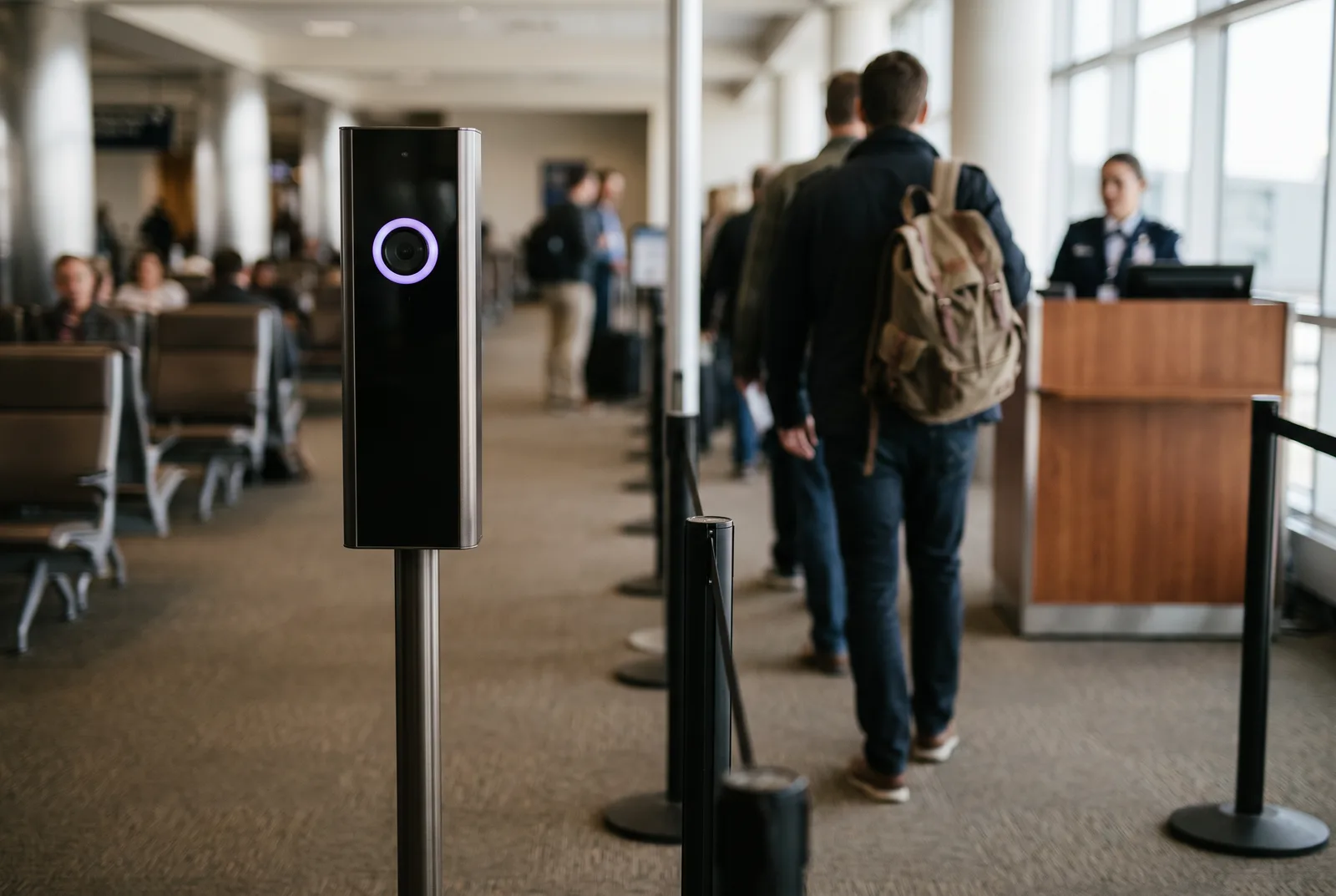
In the United States, face scans at TSA checkpoints and at boarding gates are optional for US citizens. You can say, “I’d like to opt out of the photo,” and the officer checks your ID by hand. It takes about as long. The signs saying so exist and are small. Non-citizens entering or leaving the country are generally required to be photographed.
In the EU, the new Entry/Exit System photographs and fingerprints non-EU travellers at the border, and that is not optional. Airline “biometric boarding” inside Europe usually is. The full script, including what to do when a gate agent insists, is in you can say no: opting out at the airport.
3. Stadiums, arenas and venues: usually, by choosing the other queue
Face entry at stadiums is sold as a convenience: enrol a selfie, walk through the fast lane. That version is opt-in, and the opt-out is simply not enrolling and using the ordinary ticket gate. If you already enrolled, the ticketing or identity vendor has a deletion route, and you should use it rather than just deleting the app.
The less comfortable version is venues running watchlist matching on everyone who enters, as Madison Square Garden did with lawyers from firms suing it. There is no lane for that. Our stadium face-entry rundown lists who uses which vendor.
4. Social platforms and your own phone: yes, in settings
Facebook shut down its original face-tagging system in 2021 and has since reintroduced face matching for narrower uses such as spotting scam ads and account recovery; the control lives in your privacy settings. Google Photos and Apple Photos group faces for your own library, and both let you turn that off. None of these publish your face to strangers, which puts them in a different category from section one. People often spend their effort here because the settings are easy to find. It is the least urgent item on this page.
Two related pieces: what Meta calls facial recognition and what it does not, and why turning off Face ID will not make your face private.
What does help in this category is reducing the public photos the engines feed on: old profiles, public albums, the LinkedIn headshot. It will not un-index you, but it starves the next crawl.
5. Shops and private cameras: mostly no, sometimes after the fact
A retailer running face matching at the door does not offer a lane around it. Your options are legal rather than practical. In the EU and UK you can send a subject access request asking whether you were processed and demand erasure. In Illinois, collecting a faceprint without written consent is unlawful and you can sue. In most other places, the honest answer is that you can shop elsewhere.
The same goes for number-plate and neighbourhood camera networks, which we cover in how to find out which cameras are watching your street. Knowing where they are is possible. Opting out is not.
6. Police and government systems: no
There is no opt-out from a police face-matching system, a driving-licence database being used for searches, or a national ID scheme. Some jurisdictions restrict how police may use it; a few US cities have banned municipal use outright. Those are things to vote and lobby on, not forms to fill in. If you want to understand what actually happens in an investigation, read how law enforcement really uses face search.
One indirect lever is real, though. Police tools such as Clearview are built from the same public web as the consumer engines. Fewer public photos of you, and an opt-out where you are eligible, shrink what any of them can find.
What to skip
Anti-recognition masks, make-up and patterned clothing. Some of it fools detection in a lab. None of it survives a normal day, and the photos that matter were taken years ago. See the mask you will wear exactly once.
Data-broker removal services, for this problem. They are good at what they do, which is people-search sites and marketing lists. They do not file with face-search engines, because those need your photo and sometimes your ID. We explain the gap in why data-broker services cannot cover your face.
Deleting your social accounts in a panic. It helps the next crawl, not the last one. The records already made stay until you ask for them to be removed. That is the most common surprise people run into.
Where to start
First, spend ten minutes finding out where you appear: audit your own face exposure. Second, file with the two engines a stranger would actually use, PimEyes and FaceCheck.ID. Third, do Lenso.ai, which is the quickest win. Fourth, Clearview if you are eligible. Fifth, lock down or remove the old public photos you control. Then set the reminder to check again next month.
Airports you can handle the next time you fly. Venues, the next time you buy a ticket. The police and the shop cameras are for the ballot box.
If the monthly repeat is the part you know you will not keep up, that is the piece FacePrivacy takes over. We file opt-out and removal requests with the face-search engines we support, on your behalf, and re-file them every month. We cannot promise any engine’s response, and we do not remove photos from the sites that host them.
Opting out works. Staying out is the job.
FacePrivacy files opt-out and removal requests with the major face-search engines on your behalf and re-files them monthly.
See how the removal tool works →